As internet service providers (ISPs) continue to expand their networks and subscriber base, managing user access securely and efficiently has become more challenging than ever. With increasing cybersecurity threats, growing bandwidth demands, and customer expectations for uninterrupted connectivity, traditional authentication methods are no longer sufficient.
This is where an AAA authentication server becomes a critical part of modern ISP infrastructure. It ensures that only authorized users can access network resources while simplifying subscriber management and improving operational efficiency.
In this guide, we’ll explore why every ISP should invest in an AAA authentication server, how it works, and the benefits it brings to network security, billing, and customer experience.
What Is an AAA Authentication Server?
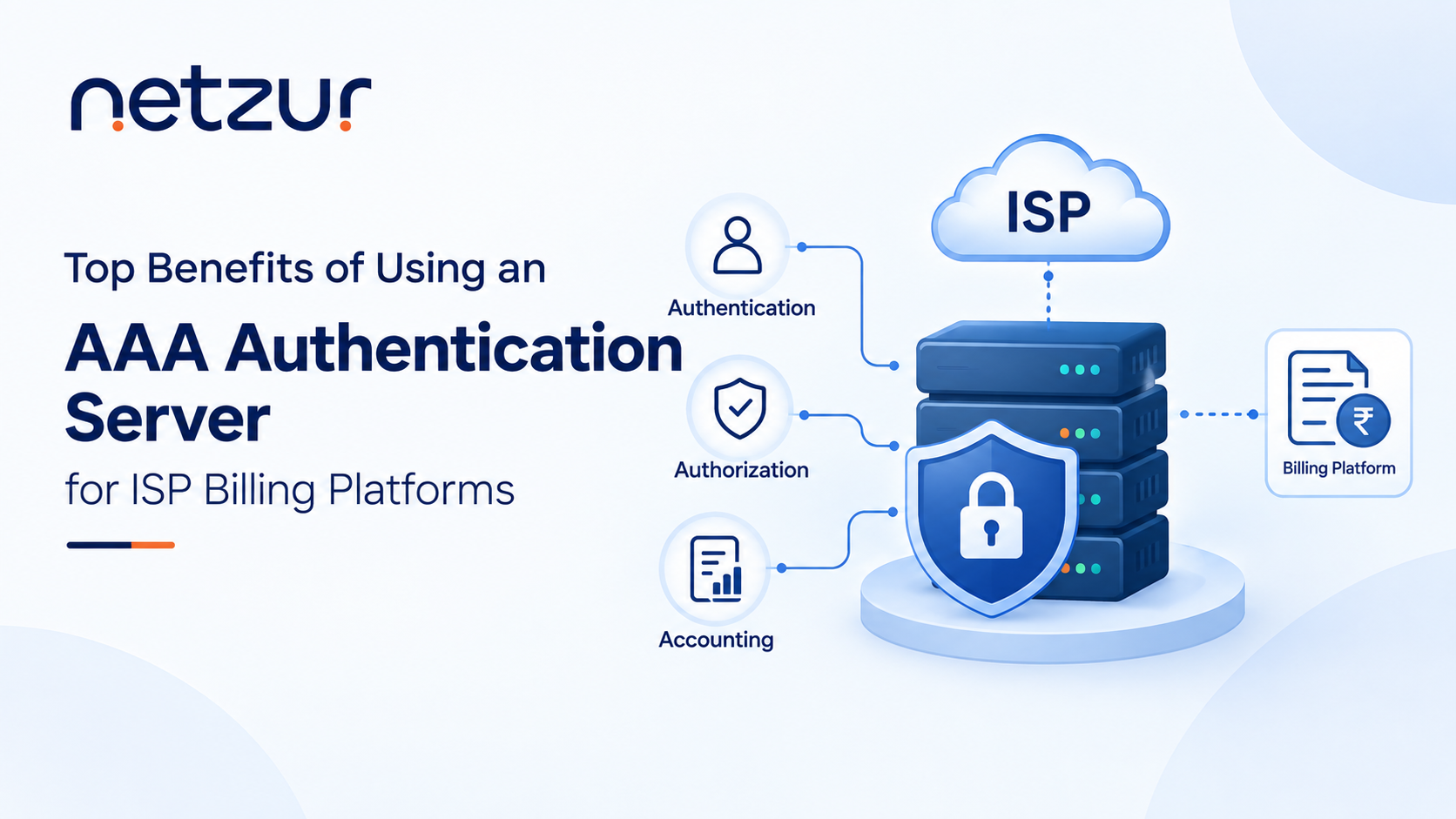
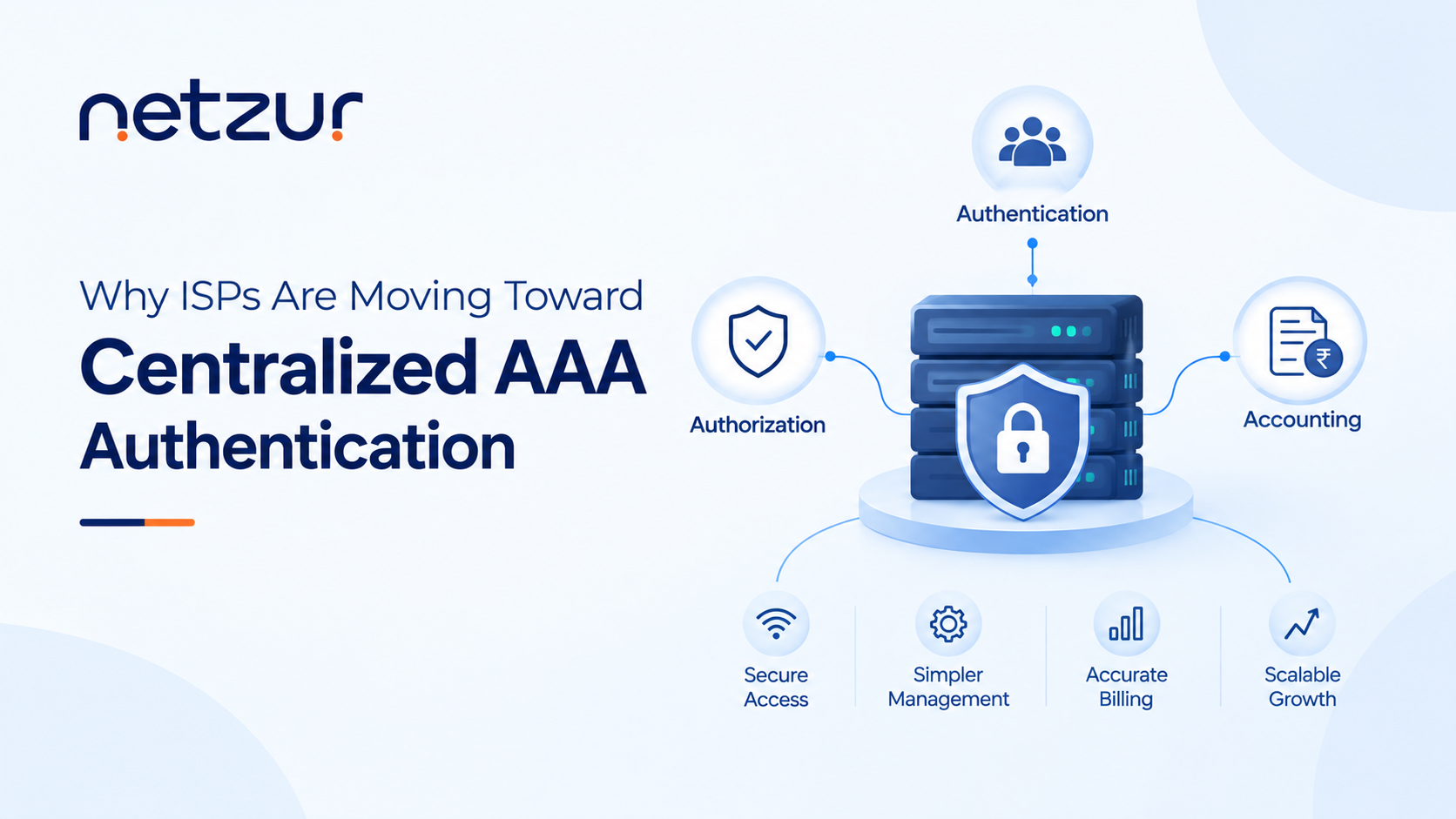
An AAA authentication server is a centralized system responsible for three core security functions:
- Authentication – Verifies a user’s identity before granting access.
- Authorization – Determines what services and resources the authenticated user can access.
- Accounting – Records user sessions, bandwidth consumption, connection duration, and other usage statistics for billing and reporting.
These three functions work together to provide secure and reliable network access while giving ISPs complete visibility into subscriber activity.
Why ISPs Need an AAA Authentication Server
Managing thousands-or even millions-of users manually is impossible. An AAA authentication server automates the entire subscriber authentication process while maintaining high levels of security.
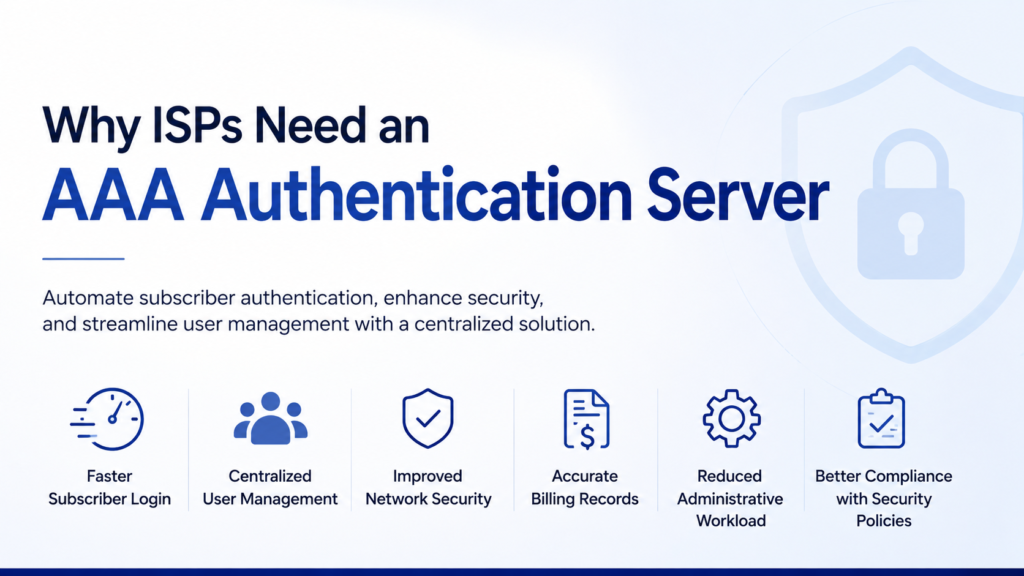
Key advantages include:
- Faster subscriber login
- Centralized user management
- Improved network security
- Accurate billing records
- Reduced administrative workload
- Better compliance with security policies
As broadband networks continue to evolve, centralized authentication has become an industry standard rather than an optional feature.
Faster Subscriber Authentication
Customers expect instant internet connectivity. Delays during authentication can negatively affect the user experience and increase support requests.
An AAA authentication server speeds up the login process by:
- Validating user credentials in real time
- Automatically applying service plans
- Supporting multiple authentication protocols
- Reducing authentication failures
The result is a seamless connection experience that improves customer satisfaction.
Enhanced Network Security
Cybersecurity threats targeting ISP infrastructure continue to rise. Unauthorized access can result in bandwidth theft, data breaches, and service disruptions.
An AAA authentication server strengthens network security by:
- Blocking unauthorized users
- Enforcing strong authentication policies
- Monitoring suspicious login activity
- Applying access controls based on user roles
- Maintaining detailed audit logs
These capabilities help ISPs protect both their infrastructure and subscriber data.
Centralized User Management
Instead of managing user accounts across multiple systems, an AAA authentication server provides a single platform for subscriber management.
Administrators can:
- Create user accounts
- Modify service plans
- Suspend inactive subscribers
- Reset passwords
- Monitor active sessions
- Track authentication history
This centralized approach reduces operational complexity while improving administrative efficiency.
Accurate Accounting for ISP Billing
One of the biggest advantages of an AAA authentication server is its accounting capability.
Every subscriber session is recorded, including:
- Login time
- Logout time
- Session duration
- Data usage
- IP address allocation
- Bandwidth consumption
These records integrate directly with ISP billing systems, helping providers generate accurate invoices while minimizing revenue leakage.
Better Network Resource Allocation
Network congestion affects customer satisfaction and service quality.
An AAA authentication server helps ISPs optimize bandwidth allocation by:
- Applying bandwidth limits
- Enforcing Fair Usage Policies (FUP)
- Prioritizing premium subscribers
- Preventing bandwidth abuse
Efficient resource management leads to improved network performance without requiring expensive infrastructure upgrades.
Scalability for Growing ISP Networks
As ISPs expand into new regions and onboard more subscribers, authentication systems must scale accordingly.
Modern AAA authentication servers support:
- Multi-location deployments
- High subscriber volumes
- Redundant authentication servers
- Cloud-based infrastructure
- High availability and failover
This ensures uninterrupted authentication services even during peak network traffic.
Seamless Integration with RADIUS Servers
Most AAA authentication servers integrate with RADIUS (Remote Authentication Dial-In User Service) servers, which remain one of the most widely used authentication protocols in ISP environments.
Together they enable:
- PPPoE authentication
- Hotspot authentication
- Fiber broadband authentication
- Wireless ISP authentication
- Enterprise Wi-Fi authentication
This integration simplifies subscriber management while improving network security.
To gain a deeper understanding of how centralized authentication, authorization, and accounting work in ISP networks, explore the FreeRADIUS documentation on the RADIUS protocol, which explains how RADIUS enables secure user access and session management.
Compliance and Audit Readiness
Regulatory requirements increasingly demand accurate logging of subscriber activities.
An AAA authentication server helps ISPs maintain compliance by:
- Recording authentication logs
- Tracking session history
- Maintaining audit trails
- Supporting legal investigations when required
Comprehensive logging also assists network administrators during troubleshooting and security incident response.
To implement stronger identity verification and access control practices, ISPs can follow the NIST Digital Identity Guidelines for modern authentication security.
Future-Proofing ISP Operations
Today’s broadband networks are rapidly evolving with technologies like:
- Fiber-to-the-Home (FTTH)
- Wi-Fi 7
- Cloud-managed broadband
- Software-defined networking (SDN)
- AI-powered network monitoring
An AAA authentication server provides the secure authentication foundation required to support these modern technologies while enabling future expansion.
Conclusion
An AAA authentication server is no longer just a security tool-it is the foundation of efficient ISP subscriber management. From faster authentication and centralized user administration to accurate accounting and stronger network security, it enables providers to deliver reliable internet services while reducing operational costs.
For ISPs looking to modernize their authentication infrastructure, integrating a robust AAA authentication server with an advanced billing and network management platform like NetZur can significantly improve efficiency, scalability, and overall service quality.
Frequently Asked Questions
1. What is the primary purpose of an AAA authentication server?
An AAA authentication server verifies user identities, controls access permissions, and records subscriber activity for billing, monitoring, and security purposes. It helps ISPs automate user management while protecting network resources.
2. How does an AAA authentication server improve ISP security?
It prevents unauthorized access by authenticating subscribers, enforcing authorization policies, monitoring login activity, and maintaining detailed accounting logs that help detect suspicious behavior and support security audits.