Internet Service Providers (ISPs) are managing increasingly complex networks, larger subscriber bases, multiple service plans, and growing billing requirements. As broadband usage continues to increase, ISPs need more than basic authentication systems to manage subscribers efficiently.
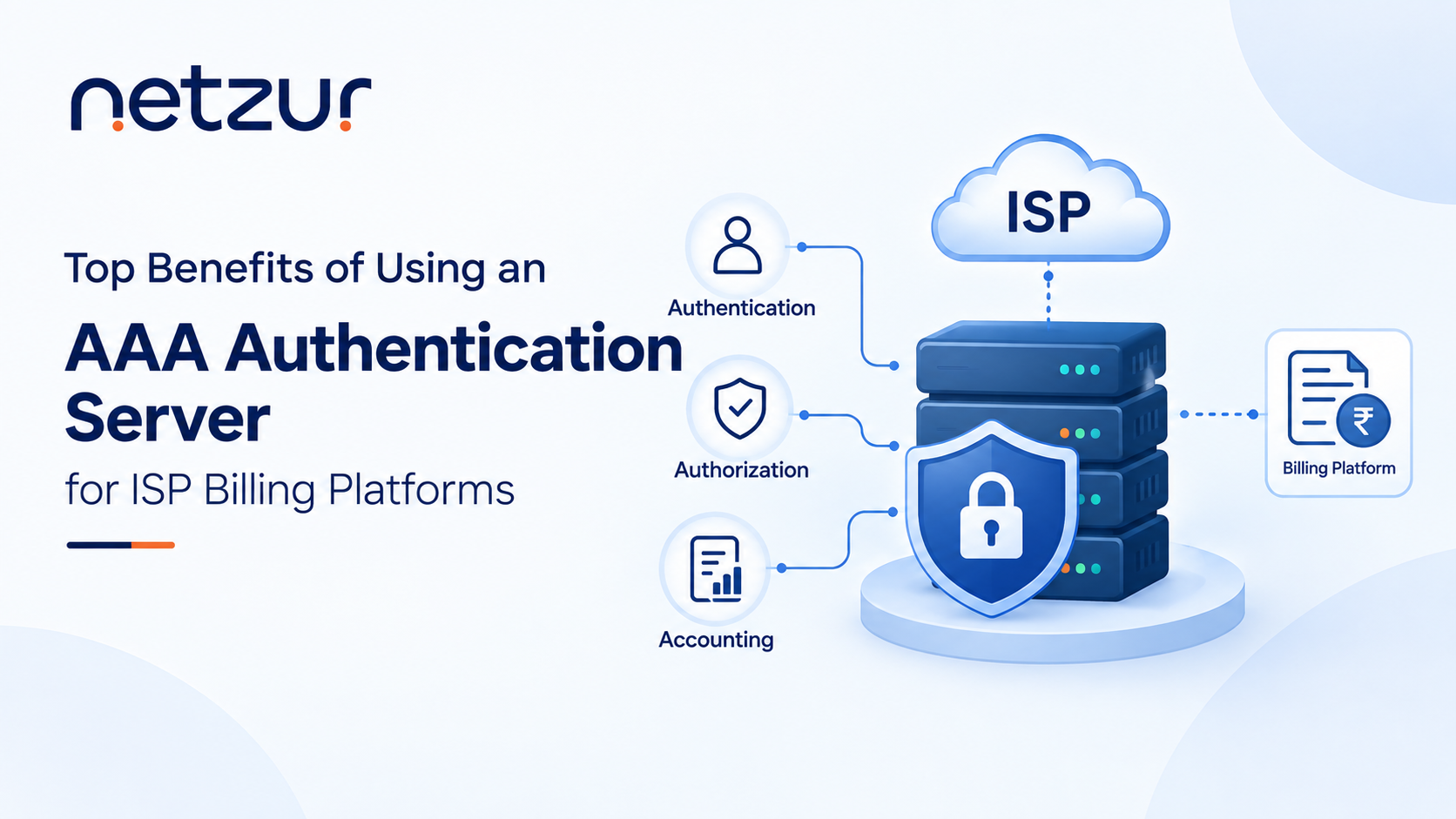
An AAA authentication server brings authentication, authorization, and accounting together in a centralized framework. This makes it easier for ISPs to control network access, apply service policies, track subscriber activity, and connect usage information with billing platforms.
For modern ISP operations, the combination of AAA and automated billing can improve security, reduce manual work, and create a more reliable subscriber management process.
What is an AAA Authentication Server?
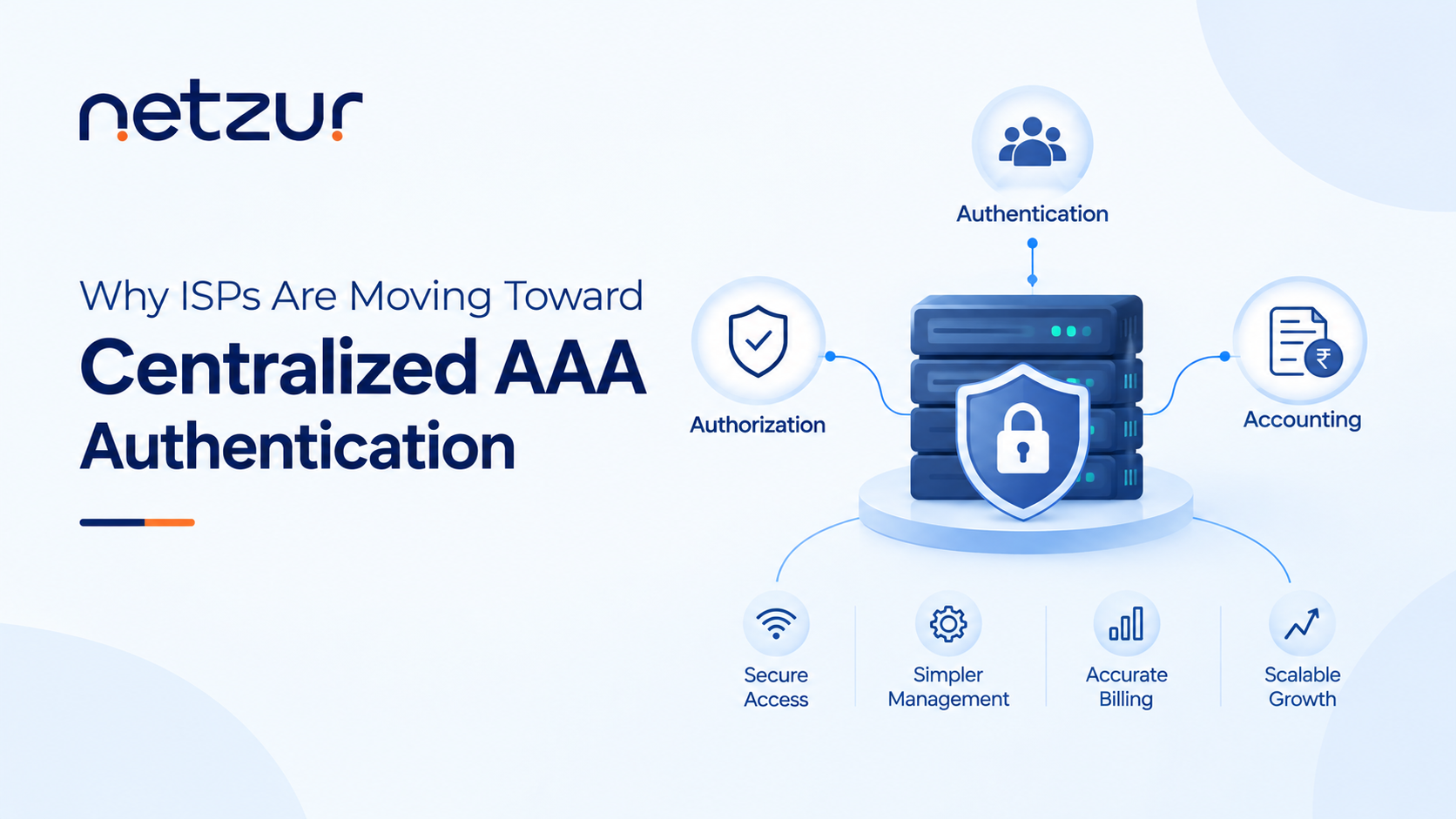
AAA stands for Authentication, Authorization, and Accounting.
An AAA authentication server performs three important functions:
- Authentication: Verifies whether a subscriber is allowed to access the network.
- Authorization: Determines which services, bandwidth limits, IP addresses, or policies should be assigned.
- Accounting: Records session information, connection duration, and usage data for monitoring and billing.
RADIUS is commonly used to implement AAA services in network environments. FreeRADIUS, for example, provides centralized authentication, authorization, and accounting capabilities for network access management.
1. Accurate Subscriber Usage Tracking
One of the biggest advantages of an AAA authentication server is its ability to collect detailed subscriber session information.
For an ISP, billing accuracy depends on reliable usage data. AAA accounting can record information such as:
- Session start and stop times
- Connection duration
- Data consumption
- Subscriber identity
- IP address information
- Network access details
This information can be transferred to an ISP billing platform, helping providers generate invoices based on accurate subscriber activity.
Accounting data can also support capacity planning and usage analysis, giving network teams better visibility into how customers consume bandwidth.
2. Better Integration Between Authentication and Billing
An ISP billing platform should not operate separately from network authentication.
When the two systems are integrated, subscriber information can flow between authentication, service provisioning, and billing processes. For example, when a customer subscribes to a particular broadband plan, the AAA system can apply the appropriate authorization attributes while the billing platform manages the customer’s account and payment information.
This reduces duplicate data entry and creates a more connected subscriber lifecycle.
3. Automated Service Authorization
Different customers may have different plans, speeds, quotas, and access policies.
An AAA authentication server can automatically determine what each subscriber is authorized to use after authentication.
For example, a premium broadband customer could receive a higher bandwidth limit, while a standard plan could receive a different service profile.
This eliminates the need for network administrators to manually configure every subscriber and makes service management more scalable.
4. Improved Network Security
Security is a major concern for ISPs because unauthorized access can affect network performance, subscriber privacy, and revenue.
AAA provides centralized control over who can access network resources and what they are permitted to use. The AAA framework combines authentication with authorization and accounting, helping administrators control access while maintaining visibility into user activity.
This centralized approach can also make it easier to investigate unusual authentication attempts and session activity.
5. Faster Subscriber Activation
Modern customers expect broadband services to be activated quickly.
With an integrated AAA and billing environment, subscriber information can move through the process with less manual intervention. Once an account and service plan are approved, authentication policies can be applied automatically.
This can shorten the time between:
Customer Registration → Billing Setup → Authentication → Service Activation
Faster activation improves the customer experience while reducing workload for support and technical teams.
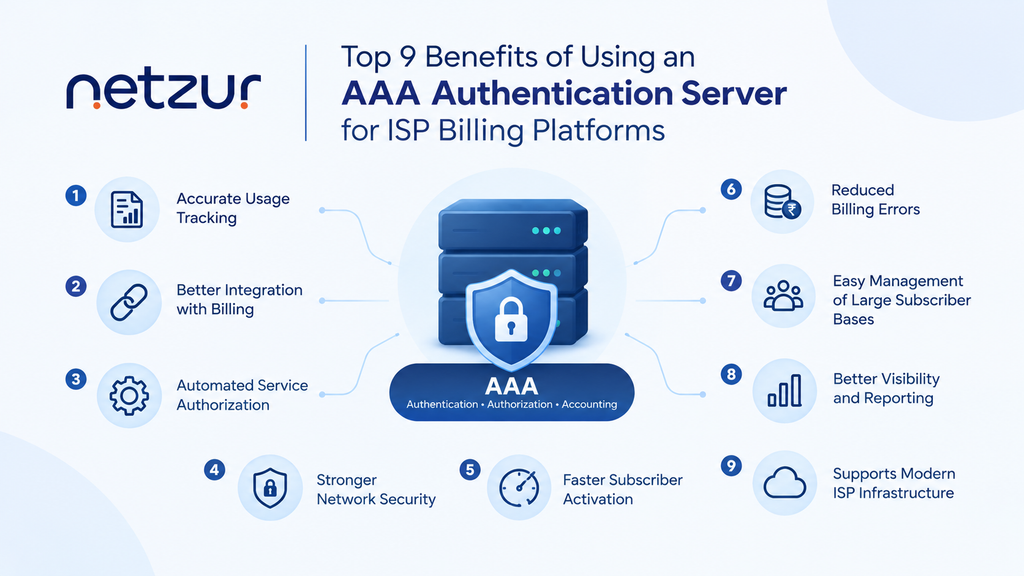
6. Reduced Billing Errors
Manual billing processes can lead to incorrect service plans, outdated subscriber information, or mismatched usage records.
An AAA authentication server provides network-level accounting information that can be matched with customer accounts in the billing system.
This creates a more reliable connection between what a subscriber purchased and how the network service is actually being used.
For growing ISPs, reducing billing discrepancies can also help minimize revenue leakage.
7. Easier Management of Large Subscriber Bases
As an ISP grows, manually managing thousands of subscribers becomes increasingly difficult.
AAA allows administrators to manage authentication and authorization centrally rather than configuring individual network devices for every user.
Modern RADIUS implementations can also integrate with databases and support scalable deployments, making them suitable for networks that need to manage large numbers of subscribers.
This makes AAA particularly valuable for FTTH providers, WISPs, enterprise connectivity providers, and broadband operators.
8. Better Visibility and Reporting
Billing teams need financial information, while network teams need technical information. An AAA authentication server helps connect these two areas by providing session and usage data.
ISPs can use this information to analyze:
- Active subscribers
- Session duration
- Bandwidth consumption
- Authentication failures
- Service usage patterns
- Network demand
These insights can support better billing decisions, troubleshooting, network planning, and customer support.
9. Supports Modern ISP Infrastructure
The broadband industry is moving toward automated provisioning, cloud-based platforms, advanced Wi-Fi, FTTH, and increasingly data-driven network operations.
An AAA authentication server provides a strong foundation for these environments by centralizing subscriber access and usage management.
When combined with ISP billing, CRM, subscriber management, and network monitoring tools, AAA can become an important part of a unified ISP operations platform.
Conclusion
An AAA authentication server does much more than verify subscriber credentials. It connects authentication, authorization, accounting, and billing into a more organized workflow.
For ISPs, the major benefits include accurate usage tracking, automated service authorization, improved security, faster activation, reduced billing errors, and better scalability.
As subscriber numbers and network complexity continue to grow, integrating AAA capabilities with a modern ISP billing and management platform such as NetZur can help providers simplify operations while delivering a more reliable customer experience.
FAQ
1. How does an AAA authentication server help ISP billing?
An AAA authentication server records subscriber authentication and accounting information, including session activity and usage data. This information can be integrated with billing platforms to support accurate invoicing and reduce billing discrepancies.
2. Is RADIUS an AAA authentication server?
RADIUS is a protocol commonly used to provide AAA functionality. It enables network devices and authentication servers to exchange information for authentication, authorization, and accounting. FreeRADIUS is one widely used implementation of the RADIUS protocol.