Internet Service Providers (ISPs) are managing more subscribers, devices, service plans, and network traffic than ever before. As broadband networks expand, maintaining separate authentication and subscriber management processes can create unnecessary complexity.
This is why many modern ISP environments are moving toward centralized AAA authentication.
AAA stands for Authentication, Authorization, and Accounting. A centralized AAA authentication server provides a structured way to verify subscribers, control their network access, and collect usage information from a central system.
For ISPs operating FTTH, broadband, WISP, and enterprise networks, centralized AAA can help simplify network operations while supporting scalability, security, and automated billing.
What is a Centralized AAA Authentication Server?
A centralized AAA authentication server manages authentication, authorization, and accounting from a common platform.
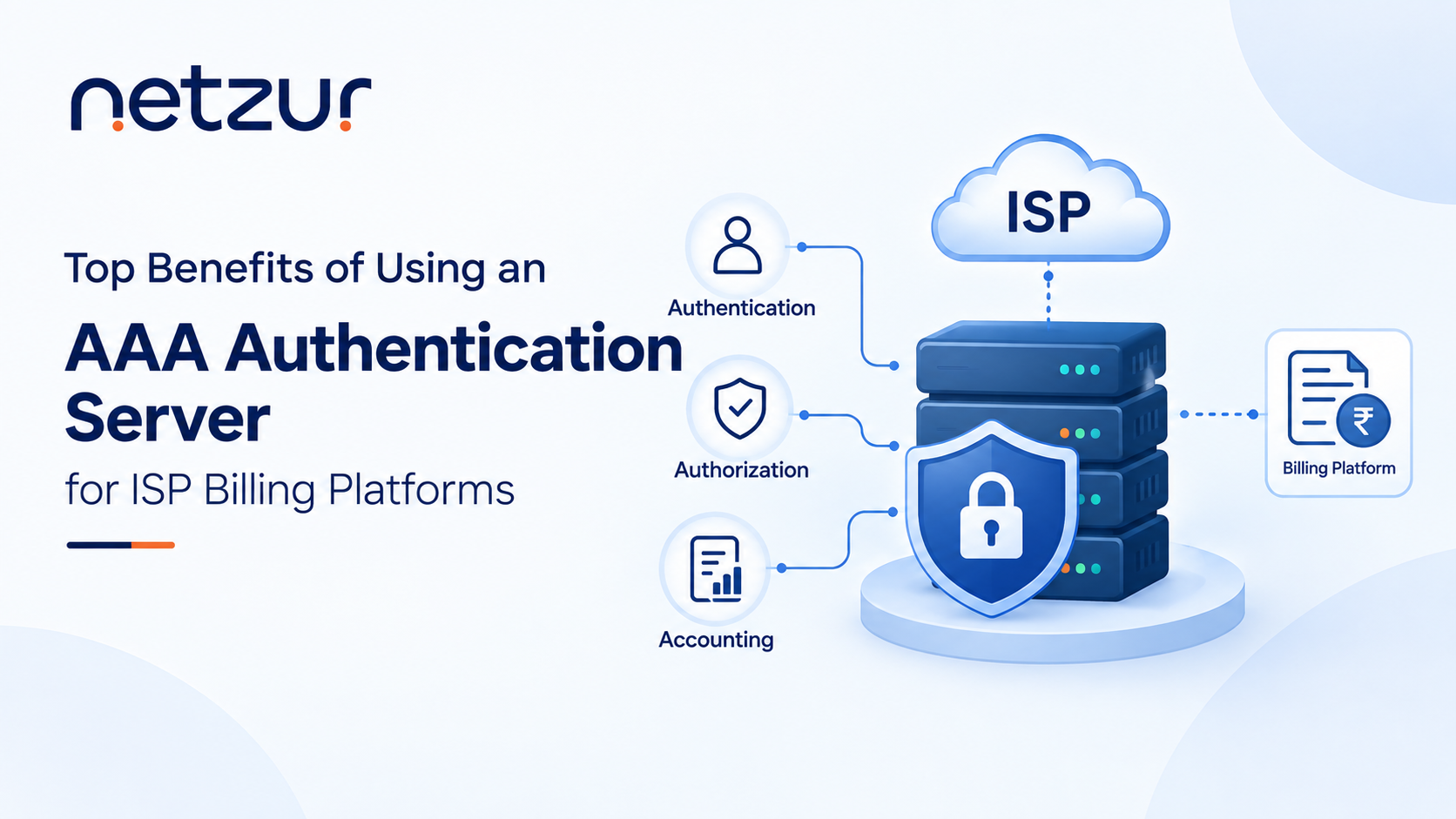
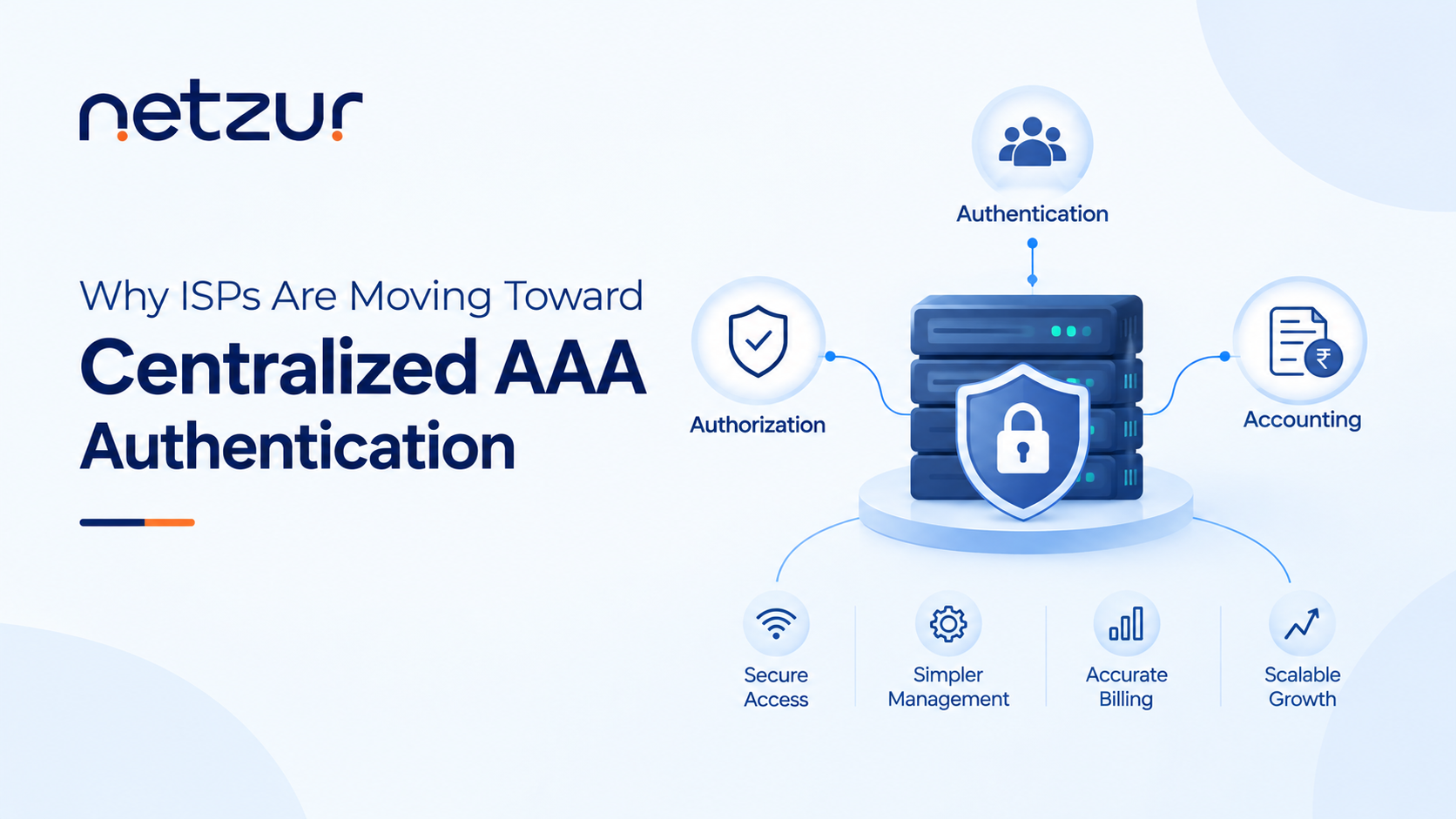
Authentication verifies whether a subscriber is permitted to connect to the network. Authorization determines which services, bandwidth policies, or network resources that subscriber can use. Accounting records session and usage information for monitoring, reporting, and billing.
RADIUS is widely used for this type of network access management. The RADIUS standard defines communication between a Network Access Server and a shared authentication server for carrying authentication and authorization information.
Instead of configuring subscriber access separately across different network devices, ISPs can centralize these functions and apply consistent policies.
For a detailed technical explanation of RADIUS-based authentication and authorization, explore the RADIUS protocol specification from the RFC Editor.
1. Simplifies Subscriber Management
Managing thousands of subscribers manually can quickly become difficult. A centralized AAA authentication server gives network administrators a single point for managing subscriber credentials and access policies.
Administrators can manage:
- Subscriber authentication
- Service profiles
- Bandwidth policies
- Access permissions
- Session information
- Account status
When a subscriber changes plans, administrators can update the relevant profile rather than manually configuring multiple network devices.
2. Improves Network Security
Security is one of the major reasons ISPs adopt centralized authentication.
A centralized AAA architecture allows providers to control who can access the network and which services each subscriber is authorized to use. It also provides a structured way to monitor authentication activity.
RADIUS uses a client-server architecture in which the Network Access Server sends authentication requests to the RADIUS server, which then returns the appropriate response and configuration information.
For modern deployments, ISPs can also consider stronger transport protections and updated RADIUS security mechanisms depending on their infrastructure and threat model.
3. Enables Accurate Usage Accounting
Billing and network management depend on reliable usage information.
AAA accounting can capture information related to subscriber sessions, such as connection activity and usage records. The RADIUS accounting specification was designed to carry accounting information from a Network Access Server to an accounting server.
This information can help ISPs:
- Monitor subscriber usage
- Generate accurate billing records
- Identify active sessions
- Analyze bandwidth consumption
- Investigate unusual usage patterns
Centralized accounting therefore connects network activity with operational and billing processes.
ISPs can also review the RADIUS Accounting specification to understand how network usage and session accounting information can be exchanged between network access devices and accounting servers.
4. Makes ISP Billing More Efficient
Authentication and billing are closely connected in broadband operations.
When a subscriber purchases a particular service plan, the AAA system can apply the corresponding authorization attributes while the billing platform manages the customer’s account.
This creates a more automated workflow:
Subscriber Registration → Authentication → Authorization → Usage Tracking → Billing
By reducing manual data entry between network and billing teams, ISPs can improve operational consistency and reduce the possibility of mismatched subscriber information.
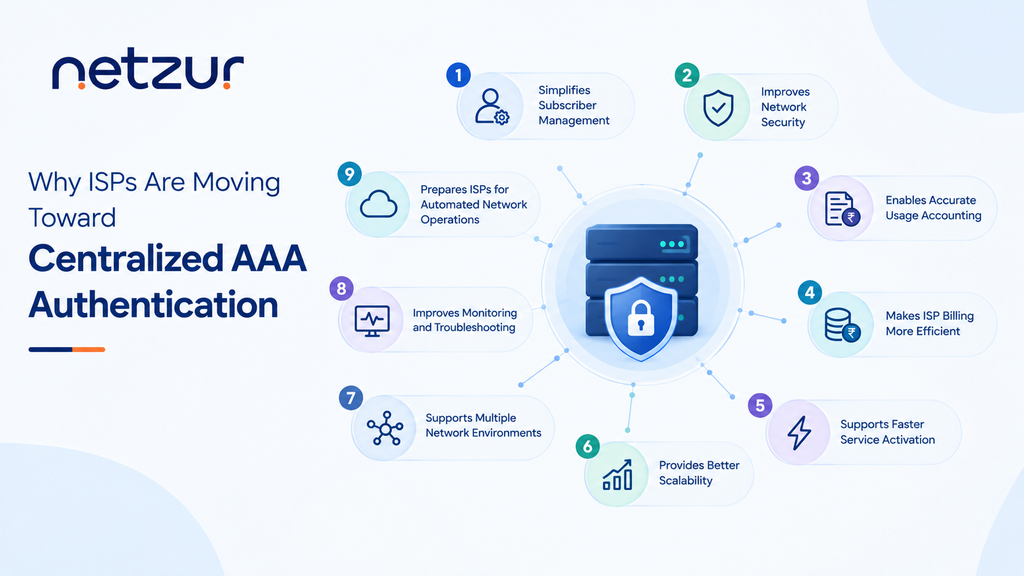
5. Supports Faster Service Activation
Customers expect broadband services to become active quickly after completing registration and payment.
Centralized AAA authentication can support automated provisioning workflows. Once a subscriber account and service profile are approved, the appropriate authentication and authorization policies can be applied without requiring extensive manual network configuration.
This is especially useful for ISPs handling frequent new connections, upgrades, plan changes, and service suspensions.
6. Provides Better Scalability
An authentication system that works for a small subscriber base may become difficult to manage as an ISP expands.
Centralized AAA allows subscriber policies and authentication processes to be managed from a common infrastructure. RADIUS also supports a proxy model, allowing one RADIUS server to forward authentication or accounting requests to another server when required.
This can help organizations design authentication architectures for multiple locations, network segments, or growing subscriber populations.
7. Supports Multiple Network Environments
ISPs rarely operate a single type of access network. They may provide services through FTTH, PPPoE, wireless networks, hotspots, or enterprise connectivity.
A centralized AAA authentication server can provide a common authentication layer across supported network environments.
This means administrators can maintain consistent subscriber policies while using different access technologies.
8. Improves Monitoring and Troubleshooting
Centralized authentication creates a clearer view of subscriber access activity.
When authentication attempts, access responses, and accounting information are collected through a centralized system, network teams have more information when troubleshooting connectivity problems.
For example, administrators can investigate whether a problem is related to credentials, authorization policies, service configuration, or network access.
This can help reduce the time required to diagnose common subscriber issues.
9. Prepares ISPs for Automated Network Operations
Modern ISP infrastructure is increasingly focused on automation, centralized management, cloud platforms, and data-driven operations.
A centralized AAA authentication server can act as an important component within this environment by connecting subscriber identity with network access and usage information.
As ISPs expand their automation strategies, centralized authentication can provide the foundation for more consistent provisioning, billing integration, and subscriber management.
Conclusion
The move toward centralized AAA authentication reflects the growing need for ISPs to manage subscribers, security, billing, and network access through more connected systems.
An AAA authentication server can help simplify subscriber management, strengthen access control, improve usage accounting, support faster activation, and provide the scalability required by growing broadband networks.
For ISPs looking to bring authentication, billing, CRM, and network management into a more unified workflow, platforms such as NetZur can provide a practical foundation for modern ISP operations.
FAQ
1. Why do ISPs use an AAA authentication server?
ISPs use an AAA authentication server to centrally manage subscriber authentication, authorization, and accounting. It helps control network access, apply service policies, track usage, and support billing operations.
2. Is RADIUS used for centralized AAA authentication?
Yes. RADIUS is commonly used to support AAA-related network access functions. It provides a client-server mechanism for authentication and authorization, while RADIUS Accounting handles usage and session accounting.