Selecting the right billing platform is an important decision for every Internet Service Provider (ISP). As broadband businesses expand, managing subscribers, recurring payments, internet packages, network authentication, and customer accounts manually becomes increasingly difficult. Modern internet providers need smarter systems that can simplify daily operations while supporting long-term business growth.
Choosing the right ISP billing software is no longer just about generating invoices. In 2026, ISPs are looking for integrated solutions that combine billing automation, subscriber management, payment tracking, network integration, and real-time business insights.
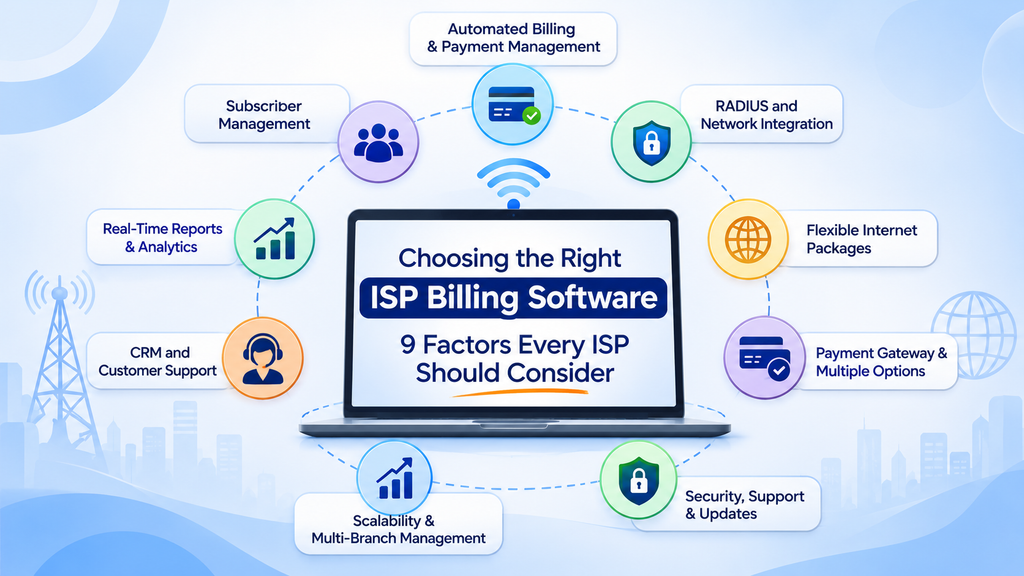
However, with different platforms offering different capabilities, finding the right solution can be challenging. Before investing in a billing system, here are nine important factors every ISP should consider.
1. Automated Billing and Payment Management
Billing automation should be one of the first features to evaluate. An effective system should automatically generate invoices, calculate subscription charges, track payment status, and send payment reminders.
For ISPs managing hundreds or thousands of subscribers, manual billing can lead to errors, delayed collections, and unnecessary administrative work.
Look for software that supports:
- Automated monthly and recurring invoices.
- Prepaid and postpaid billing options.
- Payment reminders and overdue notifications.
- Automatic payment status updates.
- Flexible billing cycles.
These capabilities help reduce manual work and create a more consistent payment collection process.
2. Subscriber Management Capabilities
Subscriber management is another essential factor. A growing ISP needs a centralized platform to manage customer information, internet plans, account status, and subscription history.
The right ISP billing software should allow administrators to register new subscribers, update customer details, assign packages, and monitor account activity from one dashboard.
A well-organized subscriber database also helps customer support teams access relevant information quickly, reducing response times and improving the overall customer experience.
3. RADIUS and Network Authentication Integration
Billing and network authentication should work together. RADIUS (Remote Authentication Dial-In User Service) helps ISPs authenticate users, authorize network access, and record session-related information.
Integrating RADIUS with billing software can simplify the connection between subscriber accounts and internet access.
Consider solutions that support:
- Centralized authentication and authorization.
- User bandwidth and access controls.
- Session accounting.
- Package-based access management.
- Integration with NAS and BNG infrastructure.
This integration helps reduce disconnected workflows between billing and network operations.
4. Flexible Internet Package and Pricing Management
Internet providers offer different packages depending on speed, bandwidth limits, subscription duration, and customer requirements.
Your billing platform should make it easy to create, modify, and manage internet plans without complicated manual processes.
For example, administrators should be able to configure different packages for residential users, businesses, prepaid customers, and postpaid subscribers.
Flexible package management allows ISPs to introduce promotional offers, update pricing, and create customized plans as market demands change.
5. Payment Gateway and Multiple Payment Options
Customers expect convenient ways to pay their internet bills. A modern billing platform should support suitable payment integrations and multiple collection methods.
Look for features such as:
- Online payment gateway integration.
- UPI, cards, and bank payment support where available.
- Payment history and transaction tracking.
- Automatic payment reconciliation.
- Digital receipts and invoices.
Providing convenient payment options can encourage timely collections and reduce the workload associated with manually verifying transactions.
6. Scalability and Multi-Branch Management
Your billing system should support business growth without requiring a complete software replacement.
As an ISP expands into new locations, adds subscribers, or works with multiple franchisees and resellers, managing operations becomes more complex.
Choose a platform that offers:
- Multi-branch and multi-location management.
- Franchise and reseller account management.
- Centralized reporting across locations.
- Role-based access permissions.
- Support for increasing subscriber volumes.
Scalable software helps maintain consistent operations as your broadband business grows.
7. CRM and Customer Support Integration
Billing is closely connected to customer service. Subscribers may contact support teams regarding payment failures, package changes, connection issues, or service interruptions.
An integrated Customer Relationship Management (CRM) system helps ISPs manage customer interactions alongside billing information.
Look for features such as ticket management, customer communication history, lead tracking, complaint management, and service request monitoring.
Combining CRM and billing in one platform helps teams understand customer requirements and resolve issues more efficiently.
8. Real-Time Reports and Business Analytics
Data-driven decisions are becoming increasingly important for internet service providers. Your billing platform should provide useful reports that help administrators understand financial performance and subscriber activity.
Important reporting capabilities include:
- Monthly revenue and collection reports.
- Outstanding payment and overdue invoice reports.
- Active and inactive subscriber reports.
- Package-wise revenue analysis.
- Reseller performance reports.
Real-time dashboards can help business owners identify payment delays, monitor revenue trends, and make better operational decisions.
9. Security, Technical Support, and Software Updates
Customer information, billing records, and payment details must be protected. Before choosing a platform, evaluate its security measures and technical support capabilities.
Check whether the provider offers secure access controls, data encryption, regular backups, audit logs, and reliable system updates.
Also consider the availability of technical assistance, onboarding support, documentation, and integration guidance.
A dependable software provider should help your team resolve technical issues and keep the platform updated as business requirements evolve.
Why Choosing the Right ISP Billing Software Matters in 2026
The ISP industry is moving towards connected, automated, and data-driven operations. Internet providers increasingly need more than standalone invoicing tools to manage their businesses effectively.
The right ISP billing software can bring billing, subscriber management, CRM, RADIUS authentication, payment tracking, and reporting together in one system.
For additional technical understanding, explore the IETF’s RADIUS protocol documentation to learn about network authentication standards. ISPs can also explore Cloudflare’s learning resources to understand modern networking and internet infrastructure.
Conclusion
Choosing the right billing platform requires evaluating your current requirements and future business goals. From automated payments and subscriber management to RADIUS integration, scalability, and reporting, every feature plays an important role in efficient ISP operations.
Before making a decision, compare available solutions, evaluate their integrations, and consider how easily they can support your growing subscriber base.
Netzur offers an integrated platform designed to help internet service providers manage billing, subscribers, network operations, CRM, and business activities through a centralized system. Choosing a solution that brings these capabilities together can help ISPs simplify workflows and prepare for sustainable growth.
FAQs
1. What is ISP billing software?
ISP billing software is a platform that helps internet service providers manage subscriber accounts, generate invoices, process payments, track outstanding dues, and automate billing operations.
2. Why do ISPs need automated billing software?
Automated billing software reduces manual errors, simplifies payment collection, manages recurring subscriptions, and helps ISPs handle large subscriber databases more efficiently.
3. Can ISP billing software integrate with RADIUS?
Yes. RADIUS integration connects subscriber authentication and network access management with billing operations, helping ISPs manage internet services more effectively.
4. What features should ISPs look for in billing software?
ISPs should consider automated invoicing, subscriber management, RADIUS integration, payment gateways, CRM, reporting, scalability, and security.