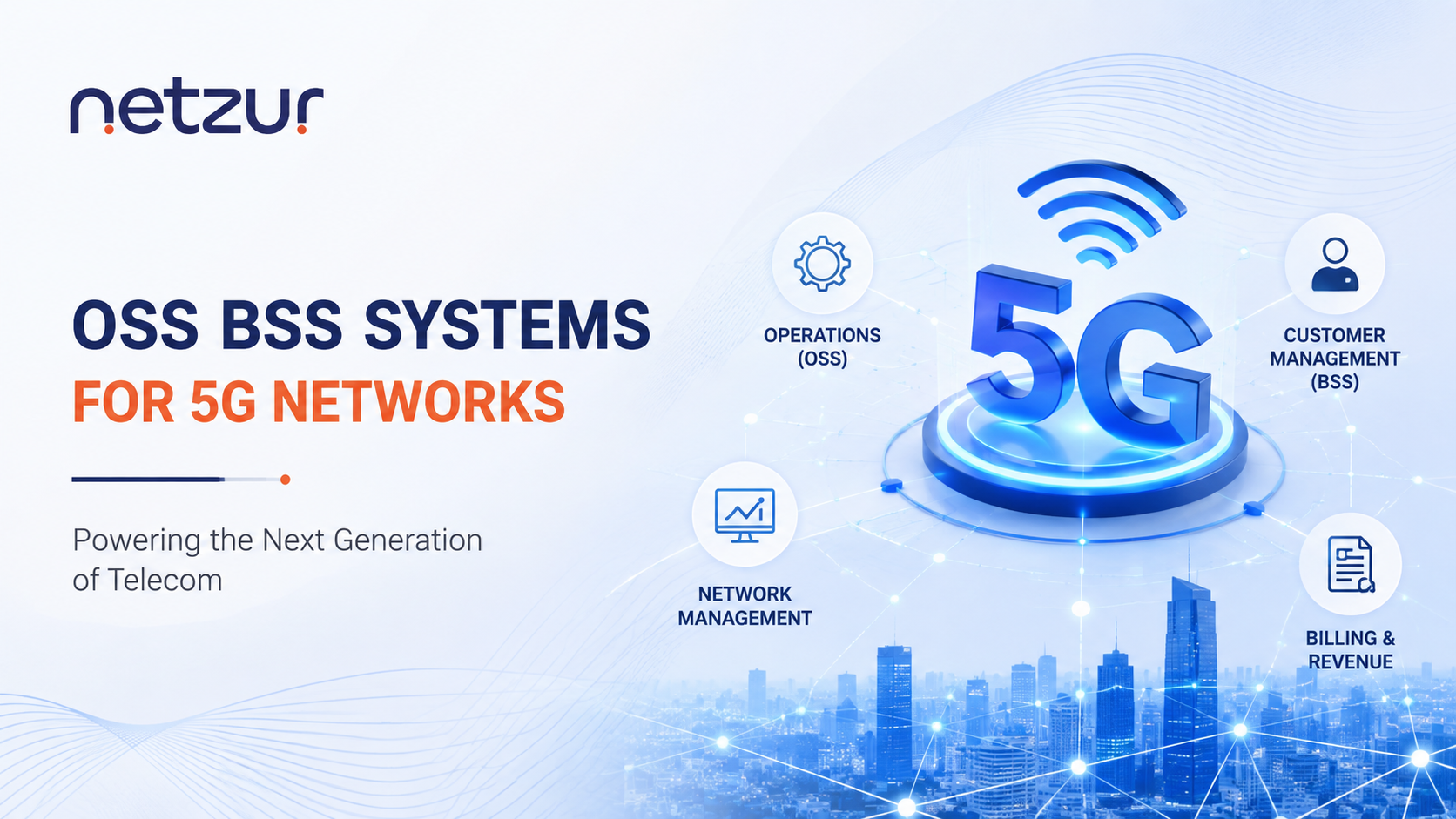
The telecommunications industry is evolving rapidly. With the growth of 5G, cloud computing, IoT, AI, and connected devices, telecom providers are managing more complex networks and customer demands than ever before. Traditional systems often struggle to keep up with this growing complexity.
This is where OSS BSS systems play a critical role.
Modern OSS and BSS platforms help telecom businesses connect network operations with customer management, billing, service delivery, and revenue processes. As the industry moves toward automation and intelligent networks, these systems are becoming an essential part of digital transformation.
In this guide, we explore what OSS BSS systems are, their key features, benefits, real-world use cases, and the trends shaping their future.
What Are OSS BSS Systems?
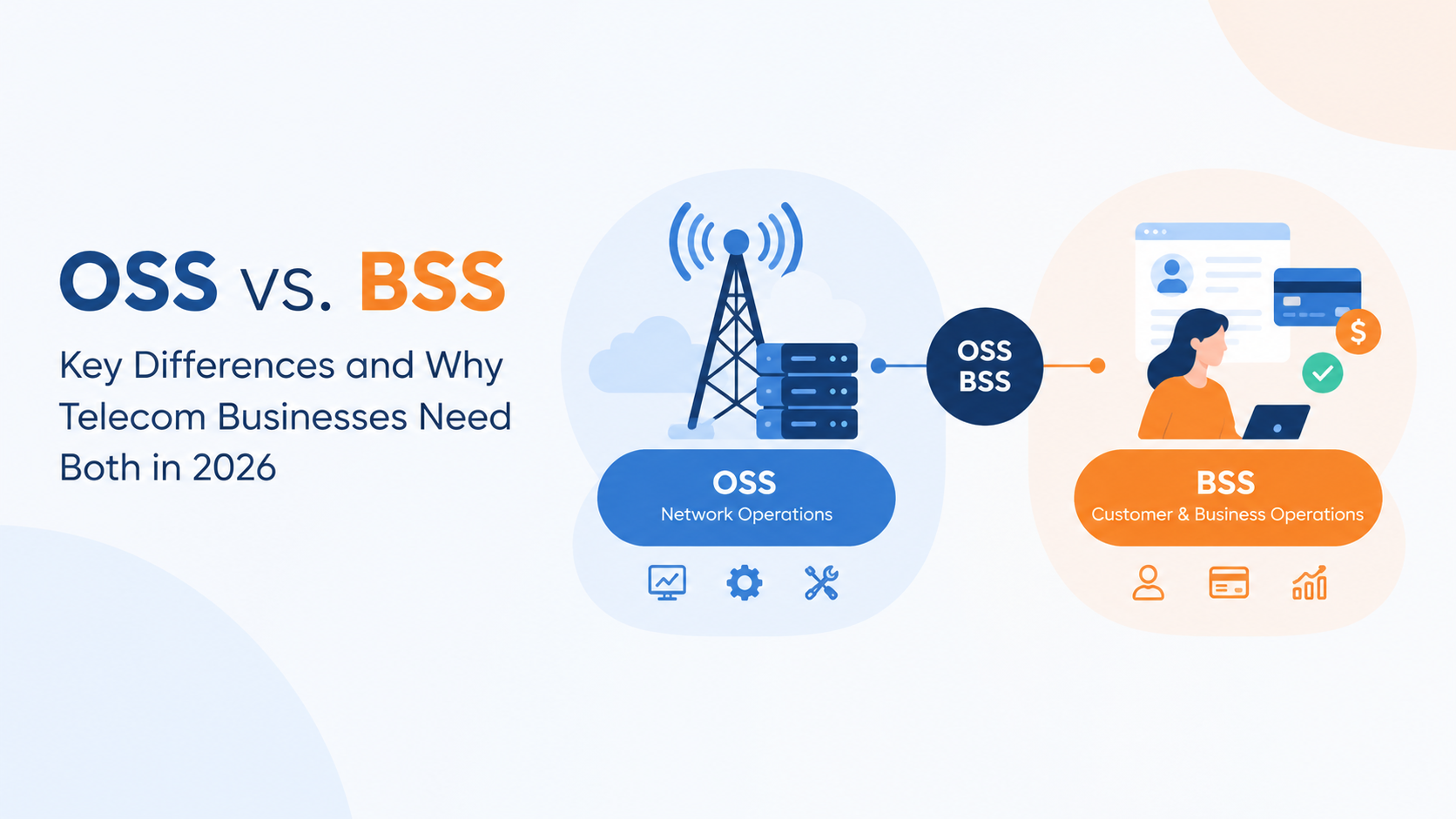
OSS stands for Operations Support Systems, while BSS stands for Business Support Systems.
Although they serve different functions, both work together to support the technical and commercial operations of a telecom business.
OSS: Managing Network Operations
OSS focuses on the operational side of telecommunications. Its key functions may include:
- Network monitoring
- Fault management
- Service provisioning
- Network inventory management
- Performance monitoring
- Resource management
These capabilities help telecom providers maintain network performance and identify operational issues.
BSS: Managing Business Operations
BSS focuses on customer-facing and revenue-related activities, including:
- Customer management
- Order management
- Product and service catalogs
- Billing and charging
- Payment processing
- Revenue management
When integrated effectively, OSS BSS systems create a connected environment where customer requests, network resources, service delivery, and billing processes can work together.
Key Features of Modern OSS BSS Systems
Modern telecom businesses require more than basic network and billing tools. Today’s platforms are increasingly designed to support automation, scalability, and real-time decision-making.
1. Automated Service Provisioning
Manual service activation can slow down operations and increase the risk of errors. Automated provisioning helps connect customer orders with network and service resources.
This can enable faster activation of broadband, wireless, enterprise connectivity, and other telecom services.
2. Real-Time Monitoring
Modern OSS capabilities provide greater visibility into network performance. Telecom operators can monitor infrastructure, identify faults, and respond to potential issues more efficiently.
Real-time insights are especially important as networks become more distributed through cloud and edge technologies.
3. Flexible Billing and Charging
Traditional subscription models are no longer the only way telecom services are sold. Providers may offer usage-based pricing, customized enterprise plans, bundled services, or on-demand connectivity.
BSS capabilities support flexible billing and charging models that can adapt to these changing business requirements.
4. Customer and Order Management
An integrated system can help manage the customer journey from service inquiry and order placement to activation, billing, and support.
This creates a more connected experience while reducing the need to manage multiple disconnected platforms.
5. API and Cloud Integration
Cloud-native and API-driven architecture is becoming increasingly important. Modern OSS BSS systems can integrate with third-party applications, digital platforms, payment systems, and emerging technologies.
This flexibility helps telecom businesses modernize without rebuilding every part of their infrastructure at once.
Major Benefits of OSS BSS Systems
Improved Operational Efficiency
Automation reduces repetitive manual processes and helps teams manage operations more efficiently. Tasks such as provisioning, monitoring, order processing, and billing can become faster and more consistent.
Better Customer Experience
Customers expect quick service activation, accurate billing, self-service options, and responsive support.
By connecting business and operational processes, OSS and BSS platforms can reduce delays between a customer order and service delivery.
Faster Time to Market
Telecom providers regularly introduce new plans, bundles, and digital services. Flexible product and service management can make it easier to launch and manage new offerings.
This can help businesses respond more quickly to changing customer and market demands.
Enhanced Revenue Opportunities
Flexible billing and product management allow telecom providers to explore new business models.
For example, services can be packaged around usage, bandwidth, enterprise requirements, or specific applications. This is particularly relevant as 5G creates new opportunities beyond traditional mobile connectivity.
Greater Network Visibility
OSS capabilities help operators understand network resources and performance more clearly. Better visibility can support faster troubleshooting and more informed operational decisions.
Common Use Cases of OSS BSS Systems
Internet Service Providers
ISPs can use OSS BSS systems to manage subscriber accounts, service provisioning, network operations, billing, and support processes from a more centralized environment.
Wireless and Mobile Operators
Mobile operators manage large customer bases and complex network infrastructure. OSS and BSS solutions can support service activation, charging, network monitoring, and customer management.
5G and Enterprise Connectivity
5G is creating opportunities for private networks, smart manufacturing, connected logistics, and other enterprise applications.
Integrated platforms can help connect business requirements with network resources and service delivery.
IoT Service Management
IoT environments can involve thousands or even millions of connected devices. Telecom businesses need scalable systems to manage connectivity, usage, billing, and service performance.
Managed WiFi and Hotspot Services
Businesses offering managed WiFi services can use integrated platforms to handle user authentication, subscriptions, billing, network management, and customer support.
Future Trends Shaping OSS BSS Systems
The future of OSS BSS systems is closely connected to automation and intelligent technologies.
AI-Powered Operations
Artificial intelligence can help analyze network data, identify unusual patterns, predict potential issues, and support faster decision-making.
AI-driven automation may also reduce the amount of manual intervention required for routine operational tasks.
Cloud-Native Architecture
Telecom businesses are increasingly moving away from rigid, monolithic infrastructure. Cloud-native systems can offer greater flexibility, scalability, and easier integration.
5G Monetization
5G enables new service models across industries such as manufacturing, healthcare, logistics, and smart cities. OSS and BSS platforms will play an important role in creating, managing, and monetizing these services.
For more insights into the evolution of mobile networks and digital connectivity, explore 5G technology and mobile ecosystem developments from GSMA.
Network Automation
Future networks will require higher levels of automation as infrastructure becomes increasingly complex. Automated monitoring, provisioning, and fault management can help telecom providers operate more efficiently at scale.
Global standards and technology development will also continue to influence how telecom infrastructure evolves. Learn more about global telecommunications standards and digital innovation from the ITU.
Open and API-Driven Ecosystems
Future platforms are expected to become more open and interconnected. APIs can make it easier for telecom businesses to integrate external applications, digital services, and new technologies into their existing ecosystem.
Conclusion
As telecom networks become more advanced, businesses need smarter ways to manage both network operations and customer-facing processes. OSS BSS systems provide a foundation for automation, flexible billing, faster service delivery, better customer experiences, and scalable telecom operations.
From ISPs and mobile operators to WiFi providers and emerging 5G businesses, modern OSS and BSS platforms can support the transition toward more connected and intelligent telecom services. Businesses looking for a comprehensive solution can explore Netzur for telecom billing, network management, and business automation needs.
FAQ
1. What is the difference between OSS and BSS systems?
OSS focuses primarily on network and operational activities such as monitoring, provisioning, fault management, and resource management. BSS focuses on customer, billing, order management, products, and revenue-related processes. Together, they create an integrated telecom management environment.
2. Why are OSS BSS systems important for modern telecom businesses?
OSS BSS systems help telecom businesses manage complex operations more efficiently. They can support automation, faster service provisioning, flexible billing, improved customer experiences, better network visibility, and new revenue opportunities, particularly with technologies such as 5G and IoT.