Today’s hotel guests expect more than a comfortable room and friendly service. They want a seamless digital experience from the moment they arrive. Whether they are checking emails, joining a video meeting, streaming entertainment, using navigation, or connecting multiple devices, reliable WiFi has become an essential part of the hotel experience.
A modern WiFi hotspot solution for hotels can help properties deliver faster, more convenient, and more secure connectivity while giving hotel teams greater control over guest access. With features such as captive portals, authentication, bandwidth management, analytics, and personalized access, hotel WiFi can become a strategic part of guest experience management.
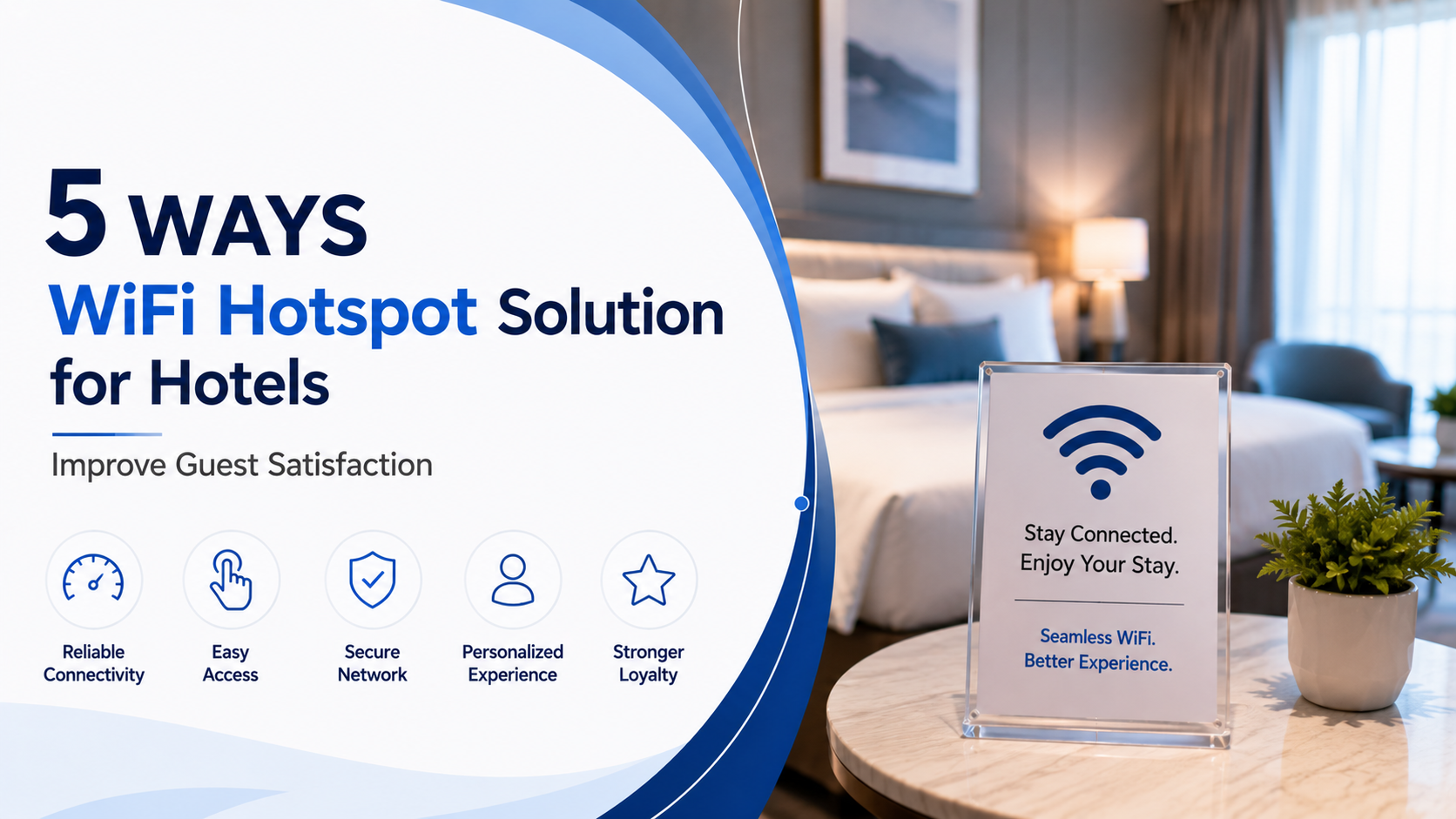
Here are five ways modern hotel WiFi can improve guest satisfaction in 2026.
1. Provide Fast and Reliable Connectivity
Nothing frustrates a guest faster than unreliable internet. Slow speeds, dropped connections, and difficulty connecting devices can negatively affect the overall stay.
Hotels now need WiFi infrastructure capable of handling multiple connected devices per guest. A traveler may simultaneously use a smartphone, laptop, tablet, smartwatch, and streaming device.
Modern wireless technologies are also making hotel networks more capable of supporting high-density environments. Cisco notes that newer WiFi technologies are designed to support increasing device density and demanding hospitality use cases such as smart rooms, streaming, and connected services.
A WiFi hotspot solution for hotels can complement this infrastructure by helping administrators manage guest access, network policies, bandwidth, and sessions more efficiently.
The result is a smoother experience for guests, even during busy periods.
2. Make Guest WiFi Login Simple
Guests don’t want to spend several minutes figuring out how to connect to hotel WiFi.
A well-designed captive portal can make the process much simpler. Instead of asking guests to manually configure complicated network settings, the system can direct them to a branded login page where they can authenticate and gain access.
Depending on the hotel’s requirements, authentication can include options such as:
- OTP verification
- Access codes
- Social login
- Guest credentials
- Terms and conditions acceptance
Cisco describes captive portals as a way to create branded WiFi onboarding experiences while supporting flexible authentication and engagement options.
The easier the connection process, the less likely guests are to contact the front desk for basic WiFi assistance.
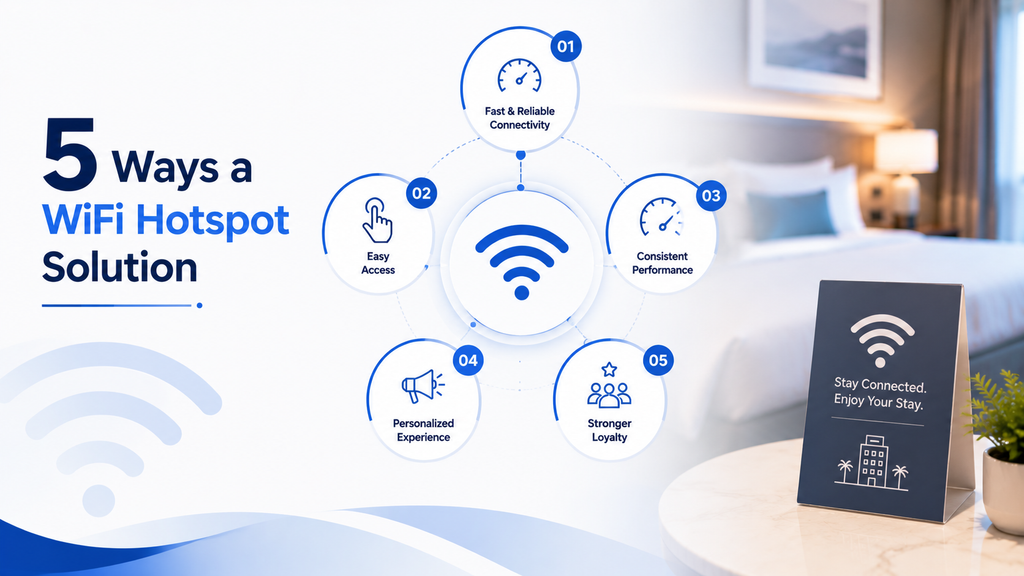
3. Deliver Consistent Performance for Every Guest
Hotel networks can experience significant traffic fluctuations. During the evening, for example, many guests may simultaneously stream videos, make video calls, browse social media, and use cloud applications.
Without effective bandwidth management, a small number of heavy users can affect the experience of everyone else.
A WiFi hotspot solution for hotels can help administrators establish appropriate access policies and bandwidth limits. Hotels can create different packages or access levels based on speed, time, or data usage.
This approach helps maintain a more consistent connection across the property.
For example, a hotel could provide standard WiFi for everyday browsing while offering a premium high-speed option for guests who need additional performance for business meetings or streaming.
4. Create a More Personalized Guest Experience
Modern hospitality is increasingly focused on personalization. Guests appreciate services that feel relevant to their needs rather than generic messages and promotions.
Hotel WiFi can become another digital touchpoint for personalization.
A branded captive portal can display useful information when guests connect, such as:
- Restaurant opening hours
- Spa services
- Local attractions
- Room-service options
- Hotel events
- Special offers
- Late-checkout options
Hotels can also create different portal experiences depending on factors such as location, visit frequency, or guest type. Cisco’s captive portal documentation highlights the ability to configure different guest experiences based on criteria such as location and visit frequency.
Modern hotels are increasingly using AI and data to create more personalized guest experiences, from tailored offers to loyalty programs, according to Google Cloud.
5. Build Stronger Guest Loyalty
A positive digital experience can contribute to how guests perceive a hotel. When connectivity is fast, secure, and easy to access, it removes one of the common sources of frustration during a stay.
Hotels can also use WiFi interactions to encourage loyalty-program registrations, communicate member benefits, or promote personalized services.
For example, a returning guest could receive a welcome message through the hotel’s branded portal along with information about available loyalty benefits.
Hotel technology is increasingly being connected to broader guest-experience strategies. As smart hospitality develops, connectivity can support everything from in-room devices and digital services to personalized experiences.
The important point is that WiFi should not be viewed only as an internet utility. It can become part of the overall relationship between a hotel and its guests.
What Should Hotels Look for in a WiFi Hotspot Solution?
When evaluating a WiFi hotspot solution for hotels, hotel operators should consider more than connection speed. The platform should support both guest convenience and network management.
Important features may include:
- Captive portal customization
- Easy guest authentication
- Bandwidth and session management
- Multiple access packages
- Usage monitoring
- Secure guest access
- Centralized administration
- Analytics and reporting
- Mobile-friendly login pages
- Promotional and engagement capabilities
Scalability is equally important. A solution that works for a small property should ideally be capable of supporting larger hotels, resorts, or multiple locations as connectivity requirements grow.
FAQs
1. What is a WiFi hotspot solution for hotels?
A WiFi hotspot solution for hotels is a system that manages guest internet access through features such as captive portals, authentication, bandwidth control, access packages, monitoring, and usage management.
2. How can hotel WiFi improve guest satisfaction?
Reliable and easy-to-access WiFi reduces connectivity frustrations, supports multiple guest devices, enables digital hotel services, and provides a smoother overall guest experience.
Conclusion
In 2026, hotel WiFi is no longer simply an amenity-it is an important part of the guest journey. A well-managed WiFi hotspot solution for hotels can improve connectivity, simplify authentication, maintain network performance, support personalization, and strengthen guest loyalty.
Hotels looking to modernize their connectivity infrastructure can use solutions such as Netzur to manage hotspot access and create a more connected hospitality experience.