Internet Service Providers (ISPs) are under constant pressure to deliver faster, more reliable, and more secure connectivity. As subscriber numbers increase, managing routers, bandwidth, devices, configurations, support requests, and network performance manually becomes increasingly difficult.
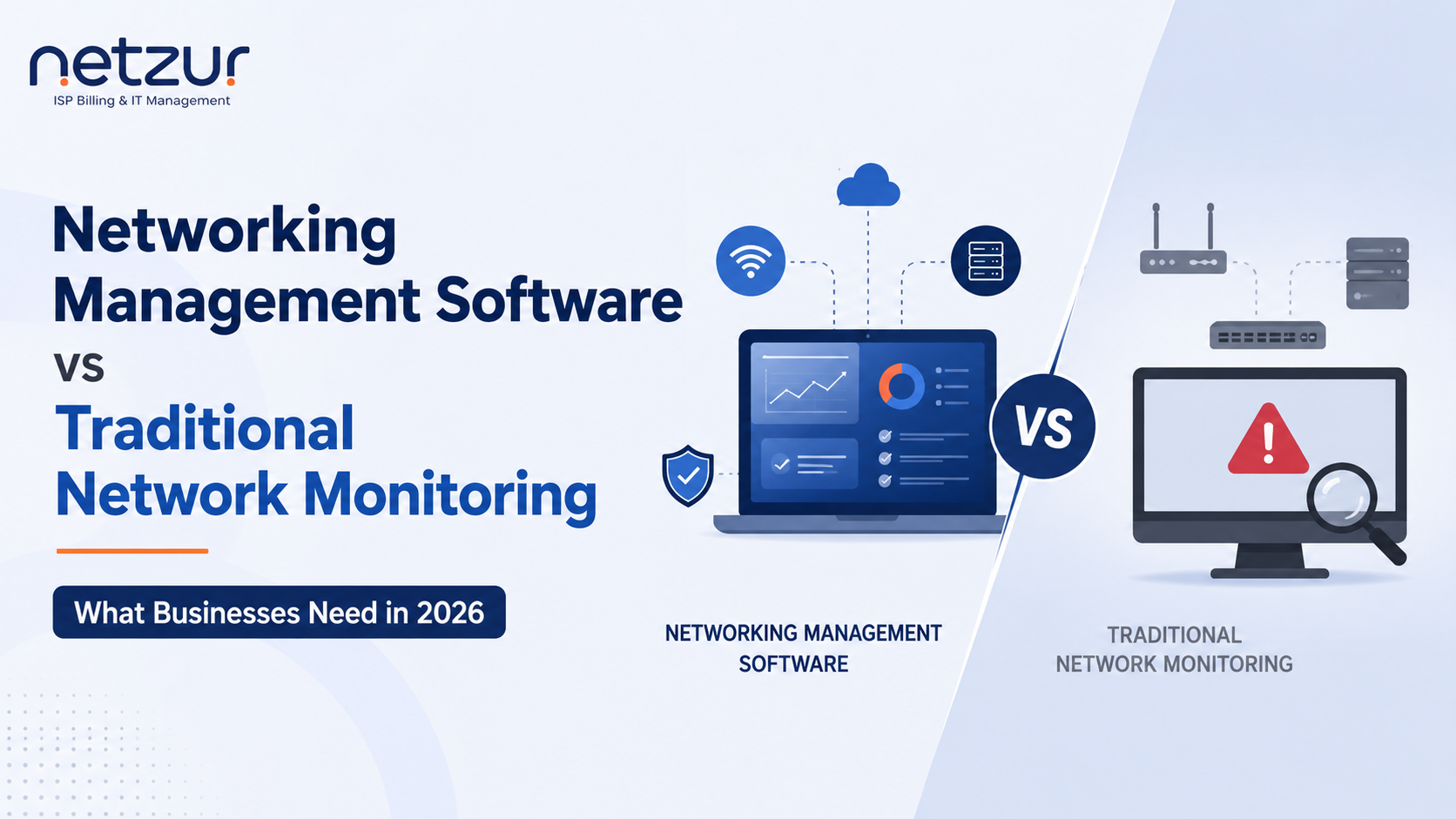
This is where networking management software becomes a strategic advantage. Modern platforms combine network monitoring, automation, device management, analytics, and operational controls to help ISPs manage increasingly complex infrastructures from a centralized environment.
The shift is especially relevant in 2026, as AI-assisted network operations, predictive analytics, automation, and real-time visibility become major networking trends. Industry research shows network teams are moving from reactive troubleshooting toward more proactive and automated operations.
Here are seven important benefits growing ISPs should consider.
1. Centralized Network Management
Growing ISPs may operate thousands of subscribers, routers, access points, switches, and other network devices. Managing each component separately can create operational bottlenecks.
Networking management software provides a centralized interface for monitoring and managing network infrastructure. Administrators can view device status, configurations, performance metrics, and alerts without constantly switching between multiple systems.
Centralized management also makes it easier to maintain consistent network policies as the ISP expands into new locations.
2. Network Automation Reduces Manual Work
Manual configuration is one of the biggest challenges for expanding service providers. Repetitive activities such as provisioning, configuration changes, software updates, and routine maintenance consume valuable technical resources.
Modern networking management software can automate many of these processes. Network automation can help reduce repetitive work, improve consistency, and minimize configuration errors. Cisco describes network automation as a way to automate network configuration, management, testing, deployment, and operations.
For an ISP, this means technical teams can spend less time performing repetitive tasks and more time improving network infrastructure and customer experience.
According to IBM, network automation helps organizations streamline repetitive network tasks, improve operational efficiency, and support scalable infrastructure as networks grow.
3. Real-Time Monitoring and Faster Issue Detection
Network downtime can quickly lead to customer complaints, support tickets, and potential subscriber churn. Waiting for customers to report connectivity problems is a reactive approach.
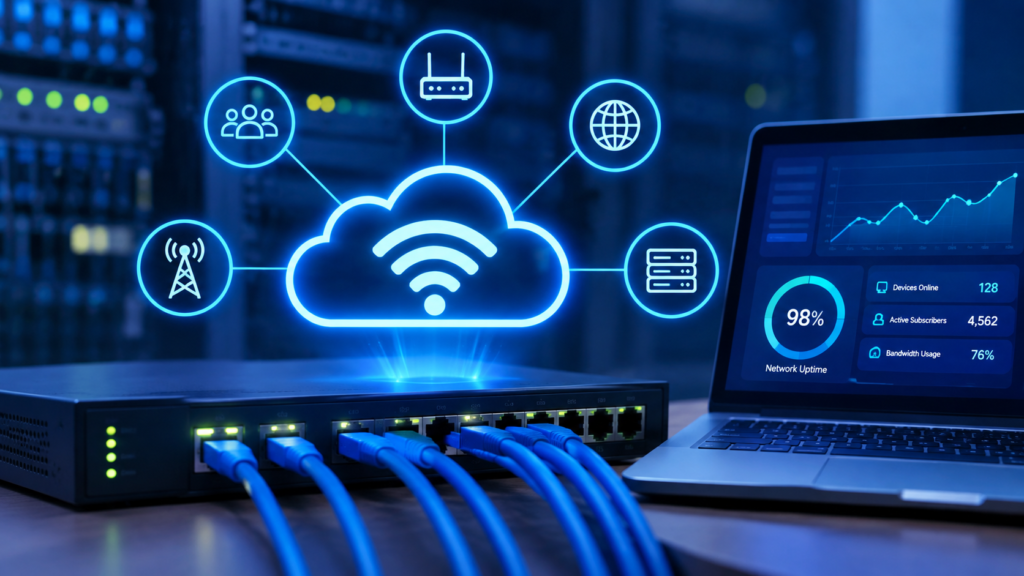
With centralized monitoring, teams can track network health and identify unusual behavior more quickly. Modern network management systems can collect information from routers, switches, access points, and other connected devices. Streaming telemetry is also increasingly being used to provide more real-time network data.
Real-time visibility helps teams identify performance degradation, connectivity issues, overloaded resources, and other problems before they become widespread service disruptions.
4. Better Scalability as the ISP Grows
Scaling an ISP is not simply about adding more subscribers. Every new customer can increase the operational workload associated with provisioning, bandwidth allocation, device configuration, monitoring, and support.
Networking management software provides tools that can make these processes more repeatable and scalable. Automated provisioning and standardized configurations allow ISPs to onboard customers and network devices without increasing manual effort at the same rate.
This is particularly valuable for fiber, wireless, and broadband providers expanding into multiple service areas.
According to Juniper Networks, network automation helps service providers simplify operations and scale network services more efficiently as infrastructure and customer demands grow.
5. Improved Network Security and Configuration Control
As networks become larger, maintaining secure and consistent configurations becomes more challenging. A single incorrect configuration can potentially create performance or security problems.
Modern network management platforms can help administrators establish standardized policies, monitor configuration changes, and identify abnormal network behavior. Networking software can also extend automation and monitoring capabilities into network security management.
For growing ISPs, centralized control makes it easier to apply security practices consistently across devices and locations.
6. Data-Driven Performance Optimization
Network performance should not be managed purely through assumptions. ISPs need meaningful data to understand bandwidth utilization, traffic patterns, device performance, outages, and capacity requirements.
Networking management software can bring these data points together through dashboards, analytics, reports, and alerts. Advanced platforms increasingly incorporate AI and machine learning to identify patterns and support predictive network operations.
This trend is accelerating in 2026. AI-driven NetOps is increasingly focused on anomaly detection, predictive performance management, and automated remediation rather than simply monitoring network status.
By analyzing network data, ISPs can make better decisions about capacity planning, infrastructure upgrades, and resource allocation.
7. Better Customer Experience and Lower Operational Costs
Ultimately, network management is connected to customer satisfaction. Subscribers expect stable connectivity, fast issue resolution, and consistent service quality.
Automation and centralized visibility can help technical teams respond to problems faster while reducing repetitive operational work. This can contribute to lower operational costs and improved service reliability.
For service providers, network automation can also support faster service deployment and more efficient use of existing infrastructure.
When operational efficiency improves alongside network performance, an ISP can potentially serve more customers without increasing infrastructure and staffing costs at the same pace.
What Should ISPs Look for in Networking Management Software?
Before choosing a platform, growing ISPs should evaluate features such as:
- Centralized device management
- Automated provisioning and configuration
- Real-time network monitoring
- Bandwidth and traffic management
- Alerts and performance analytics
- Multi-vendor device compatibility
- API and third-party integrations
- Reporting and dashboards
- Security and access controls
- Scalability for future subscriber growth
The best solution should not simply monitor a network. It should help the ISP manage, automate, analyze, and optimize network operations from a unified environment.
FAQs
1. What is networking management software?
Networking management software is a platform used to monitor, configure, automate, and manage network devices and services. For ISPs, it can help manage infrastructure, improve visibility, automate repetitive tasks, and optimize network performance.
2. Why do growing ISPs need networking management software?
Growing ISPs face increasing numbers of subscribers, devices, configurations, and support requirements. Networking management software helps centralize operations, automate routine processes, detect network problems faster, and scale infrastructure more efficiently.
Conclusion
As ISP networks become more complex, relying entirely on manual network management can limit growth and increase operational pressure. Networking management software provides a practical foundation for centralized visibility, automation, scalability, security, and data-driven optimization.
In 2026, the combination of network automation, real-time monitoring, analytics, and AI-assisted operations is making intelligent network management increasingly important.
For ISPs looking to modernize their operations, Netzur offers solutions designed to simplify ISP network and service management while supporting efficient, scalable growth.