
The hospitality industry is rapidly embracing digital transformation, and reliable internet connectivity has become essential to delivering exceptional guest experiences. From streaming entertainment and mobile check-ins to smart room controls, modern hotels depend on strong and secure networks to keep their services running smoothly.
In 2026, hotel wifi solutions are evolving beyond basic internet access. Cloud management, artificial intelligence (AI), advanced security, and connected devices are changing how hotels manage their networks and serve guests.
Understanding these seven trends can help hotel owners and hospitality businesses prepare for changing guest expectations and future technology requirements.
1. Cloud-Based Hotel WiFi Management
Cloud-based network management is becoming increasingly important for hotels that want to simplify their IT operations. Instead of managing network equipment separately, administrators can monitor access points, review performance, and troubleshoot connectivity issues through a centralized platform.
This approach is particularly useful for hotel chains and resorts operating across multiple locations. IT teams can apply consistent network policies, identify problems remotely, and reduce the need for frequent on-site troubleshooting.
As hotels expand their digital services, cloud-managed infrastructure offers a scalable way to manage connectivity without unnecessarily increasing operational complexity.
2. AI-Powered Network Monitoring
Artificial intelligence is creating new opportunities for proactive network management. Traditional monitoring often requires IT teams to investigate problems after guests report slow internet or connection failures.
AI-assisted monitoring can help identify unusual network activity, detect performance patterns, and highlight potential issues before they cause significant disruption. Depending on the platform, it may also recommend troubleshooting actions or automate routine tasks.
For hotels, these capabilities can support more consistent connectivity during busy periods. However, AI should complement reliable network design, security controls, and human oversight rather than replace them.
3. Wi-Fi 6E and Wi-Fi 7 for Better Performance
Guests increasingly expect hotel internet to support video conferencing, online gaming, high-definition streaming, and multiple connected devices. Older network infrastructure may struggle when hundreds of users connect simultaneously.
Wi-Fi 6E and Wi-Fi 7 introduce capabilities that can improve wireless performance when supported by compatible devices, access points, and network infrastructure. Wi-Fi 6E extends Wi-Fi 6 into the 6 GHz band, while Wi-Fi 7 adds features designed to improve capacity and responsiveness.
Hotels should assess building layout, device density, internet bandwidth, and existing cabling before investing in upgrades. Simply installing newer access points will not eliminate every connectivity problem.
4. Stronger Guest Authentication and Network Security
Hotel networks serve different users, including guests, employees, contractors, and connected room devices. Giving every user unrestricted access to the same network can increase security risks.
Modern hotel wifi solutions increasingly emphasize secure authentication, encrypted connections, access controls, and network segmentation. Captive portals can provide a convenient guest login experience, while suitable authentication systems can help administrators manage access policies.
Hotels should separate guest traffic from sensitive systems such as payment terminals, staff applications, and property management platforms. Regular firmware updates, monitoring, and appropriate data protection practices are also essential.
For additional guidance, explore Cisco’s State of Wireless 2026 report, which discusses wireless performance, productivity, and security considerations.
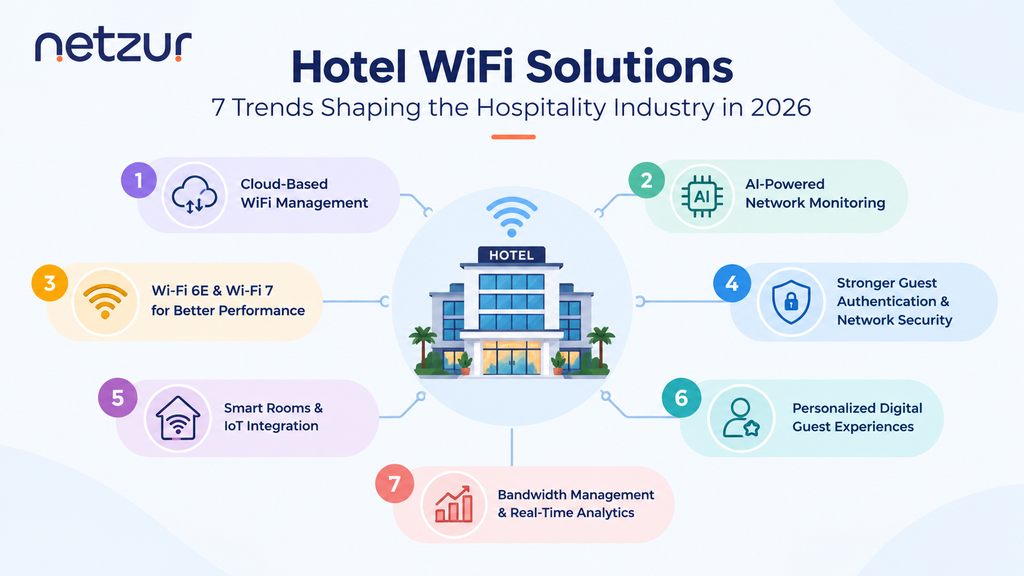
5. Smart Rooms and Internet of Things (IoT)
Smart hospitality technology is transforming hotel rooms into connected environments. Smart thermostats, connected televisions, digital door locks, occupancy sensors, and automated lighting can improve convenience while helping staff manage property resources.
These devices rely on dependable network infrastructure to communicate effectively. As the number of connected devices grows, hotels need sufficient wireless coverage, appropriate capacity, and clear security boundaries between systems.
Network segmentation is especially important because guest devices and operational equipment have different connectivity requirements. A well-designed network helps hotels support smart services without compromising the performance or security of other systems.
6. Personalized Digital Guest Experiences
Travelers increasingly expect convenient digital services throughout their stay. Mobile check-in, digital room keys, online service requests, and personalized recommendations can reduce friction and make hotel experiences more convenient.
Reliable connectivity is the foundation of these services. If the network frequently disconnects, guests may struggle to access essential features or communicate with hotel staff.
Hotels can also use connected platforms to improve service coordination, provided they handle personal information responsibly and obtain appropriate permissions. The goal is to combine digital convenience with privacy and the human interaction that remains central to hospitality.
7. Centralized Bandwidth Management and Real-Time Analytics
During holidays, conferences, and peak occupancy periods, simultaneous streaming, video calls, and business applications can place significant pressure on hotel networks.
Bandwidth management helps administrators allocate network resources according to business requirements. For example, a hotel may prioritize essential operational applications while establishing fair usage policies for guest connections.
Real-time analytics can help teams monitor bandwidth consumption, identify congested access points, and understand recurring performance issues. These insights support better capacity planning and more informed infrastructure investments.
Hotels should evaluate both internet connection capacity and internal wireless performance, as either can become a bottleneck.
For a broader view of hospitality technology developments, see Comcast Business’s hospitality technology trends report for 2026.
Conclusion
The future of hospitality depends on connectivity that is reliable, secure, scalable, and easy to manage. From cloud-based monitoring and AI-assisted troubleshooting to smart rooms and bandwidth optimization, these trends are reshaping how hotels deliver digital services.
Choosing the right hotel wifi solutions requires more than selecting faster equipment. Hotels must consider guest expectations, network security, device density, and long-term operational needs.
Netzur helps businesses explore network management and connectivity solutions that support efficient operations. With the right technology strategy, hospitality providers can build a stronger foundation for connected guest experiences in 2026 and beyond.
FAQ
1. What are hotel WiFi solutions?
Hotel WiFi solutions include wireless infrastructure, access points, authentication, security, and network management tools that provide internet connectivity for guests and hotel operations.
2. Why are hotel WiFi solutions important in 2026?
They support digital check-in, streaming, remote work, smart room devices, and online guest services while helping hotels maintain reliable and secure connectivity.
3. How can hotels improve Wi-Fi performance?
Hotels can assess wireless coverage, upgrade suitable access points, optimize bandwidth allocation, monitor network performance, and address interference or capacity limitations.
4. Are cloud-based hotel WiFi solutions useful for hotel chains?
Yes. Cloud-based management can provide centralized monitoring, consistent network policies, and remote troubleshooting across multiple properties, depending on the platform’s capabilities.
5. How can hotels secure guest Wi-Fi networks?
Hotels should use encryption, appropriate authentication, network segmentation, access controls, regular updates, and ongoing security monitoring to protect guests and operational systems.
