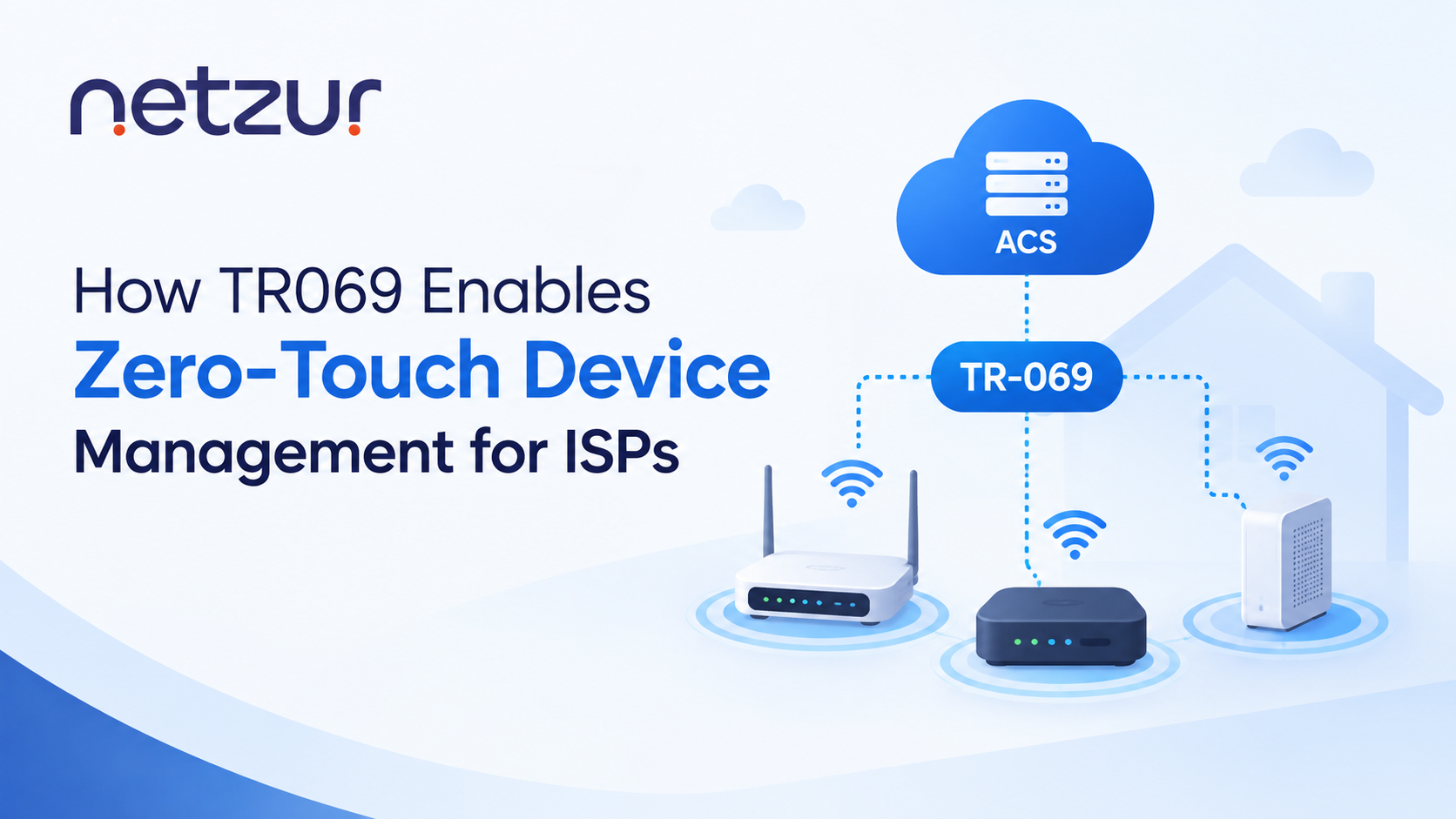
Internet Service Providers (ISPs) are managing increasingly complex broadband networks, with thousands or even millions of routers, modems, gateways, and other customer-premises equipment (CPE) connected to their infrastructure. Manually configuring and troubleshooting every device is no longer practical.
This is where TR069 becomes valuable. TR-069, also known as the CPE WAN Management Protocol (CWMP), enables ISPs to remotely configure, monitor, update, and troubleshoot customer devices through an Auto Configuration Server (ACS).
As broadband providers move toward automation, zero-touch provisioning, and more efficient network operations, TR069 can play an important role in reducing manual intervention while improving customer experience.
What Is TR069?
TR069 is a protocol designed for the remote management of CPE devices. It allows an ISP’s management platform to communicate with compatible routers, modems, gateways, and other network equipment.
Instead of sending a technician to a customer’s location or asking users to change complicated router settings themselves, an ISP can perform many management tasks remotely.
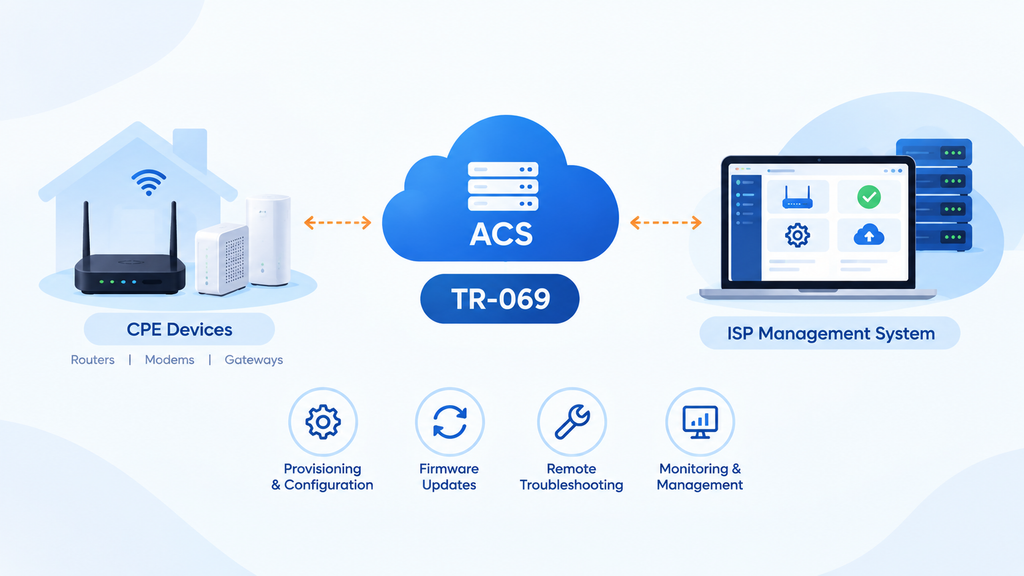
A typical TR069 environment includes:
- CPE devices: Routers, gateways, modems, and other customer equipment.
- ACS: The Auto Configuration Server that manages connected CPE devices.
- TR069 protocol: Provides communication between the CPE and ACS.
- ISP management system: Can integrate device data and management functions into broader network operations.
For ISPs, this creates a foundation for centralized and automated device management.
How TR069 Enables Zero-Touch Device Management
Zero-touch management means minimizing or eliminating manual configuration during device deployment and ongoing maintenance. TR069 supports this approach through several capabilities.
1. Automated Device Provisioning
When a compatible device connects to the network, TR069 can allow it to communicate with the ACS and receive predefined configuration settings.
The ISP can automatically apply parameters such as network settings, service configurations, and other device-specific requirements.
This reduces the need for manual router configuration and helps accelerate customer activation.
2. Remote Configuration
Network requirements can change over time. Instead of configuring individual devices manually, administrators can use the ACS to remotely modify supported settings.
For example, an ISP may need to update wireless parameters, service configurations, or other CPE settings across a group of customers.
Centralized configuration makes large-scale changes significantly easier to manage.
3. Remote Firmware Updates
Outdated firmware can create security, compatibility, and performance issues. TR069 can help ISPs remotely manage firmware upgrades on supported devices.
Rather than requiring customers to download and install updates themselves, the ISP can automate or centrally coordinate firmware management.
This is especially useful when providers operate large fleets of CPE devices with different deployment dates and configurations.
4. Faster Troubleshooting
Customer complaints about slow internet, connection problems, or router issues often require technical investigation.
With TR069-enabled management, support teams can access relevant device information remotely, depending on the capabilities and permissions configured for the environment.
This can reduce unnecessary technician visits and help support teams diagnose problems faster.
TR069 and the Rise of Broadband Automation
The shift toward automation is becoming increasingly important as ISPs expand their subscriber bases. Managing every device manually increases operational workload and makes it harder to maintain consistent configurations.
TR069 helps move device management from a reactive process toward a more centralized and automated model.
It can support workflows such as:
New device → Automatic connection → ACS identification → Configuration → Service activation → Remote monitoring → Automated maintenance
This approach can help ISPs scale operations without increasing manual workload at the same rate as their subscriber base.
Benefits of TR069 for Modern ISPs
Implementing TR069-based device management can provide several operational advantages:
Lower support costs: Remote management can reduce the number of technician visits and manual support activities.
Faster service activation: Automated provisioning can help new customers get connected more quickly.
Improved consistency: Centralized configurations reduce the possibility of human configuration errors.
Scalable operations: ISPs can manage large numbers of compatible devices from a centralized platform.
Better customer experience: Faster troubleshooting and automated maintenance can reduce service interruptions.
Improved device visibility: Centralized management provides useful information about connected CPE equipment.
For additional technical background, ISPs can refer to the Broadband Forum’s specifications and resources on broadband device management and TR-069-related technologies.
Is TR069 Still Relevant in 2026?
Yes. Although broadband management technologies continue to evolve, TR069 remains relevant in environments where ISPs need centralized CPE provisioning and management.
Modern network operators are also exploring newer approaches, including USP (TR-369), cloud-based management platforms, API-driven automation, and AI-assisted network operations. However, many existing broadband deployments still rely on TR069-compatible infrastructure.
For ISPs, the practical approach is often to evaluate their current CPE fleet, management architecture, security requirements, and automation goals before deciding how TR069 fits into their long-term strategy.
Best Practices for TR069 Deployment
ISPs should consider several factors when implementing TR069:
- Use secure communication between CPE devices and the ACS.
- Maintain accurate device inventories.
- Apply role-based access controls to management systems.
- Keep firmware and device configurations updated.
- Monitor failed provisioning and configuration requests.
- Create standardized configuration templates.
- Plan migration strategies as newer device-management technologies are introduced.
Security should remain a priority because remote device management systems can become an important part of an ISP’s operational infrastructure.
FAQ
1. What is TR069 used for?
TR069 is primarily used by ISPs and network operators to remotely provision, configure, monitor, troubleshoot, and update compatible customer-premises equipment such as routers, modems, and gateways.
2. What is the role of an ACS in TR069?
An Auto Configuration Server (ACS) acts as the central management platform that communicates with TR069-enabled CPE devices. It can automate provisioning, configuration, firmware management, and other supported device-management tasks.
Conclusion
As ISPs continue moving toward automated and scalable network operations, TR069 provides a practical foundation for zero-touch device management. From automated provisioning and remote configuration to firmware updates and troubleshooting, it can help providers manage large CPE fleets more efficiently.
For ISPs looking to combine billing, network management, automation, and customer-premises equipment management into a more streamlined operational environment, solutions from Netzur can complement these broader network-management goals.