Running a broadband business involves much more than providing internet connectivity. ISPs need to manage subscribers, billing, network access, customer support, payments, service plans, and technical operations every day. As subscriber numbers increase, managing these activities manually can become time-consuming and difficult to scale.
This is where ISP management software can make a significant difference. By bringing important ISP operations into one centralized system, businesses can automate repetitive tasks, improve visibility, and create more efficient workflows.
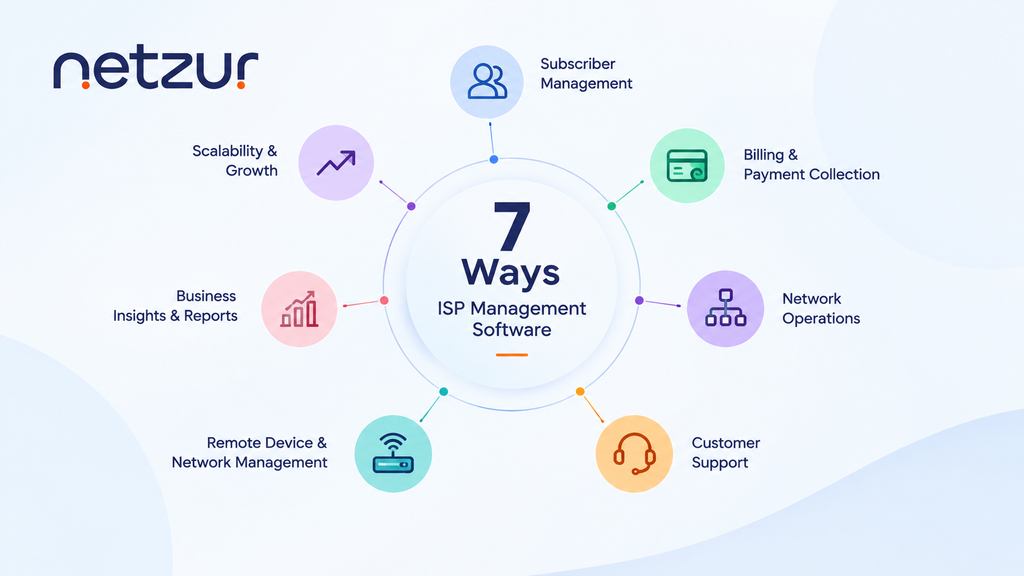
Here are seven ways ISP management software can improve broadband business efficiency in 2026.
1. Automates Subscriber Management
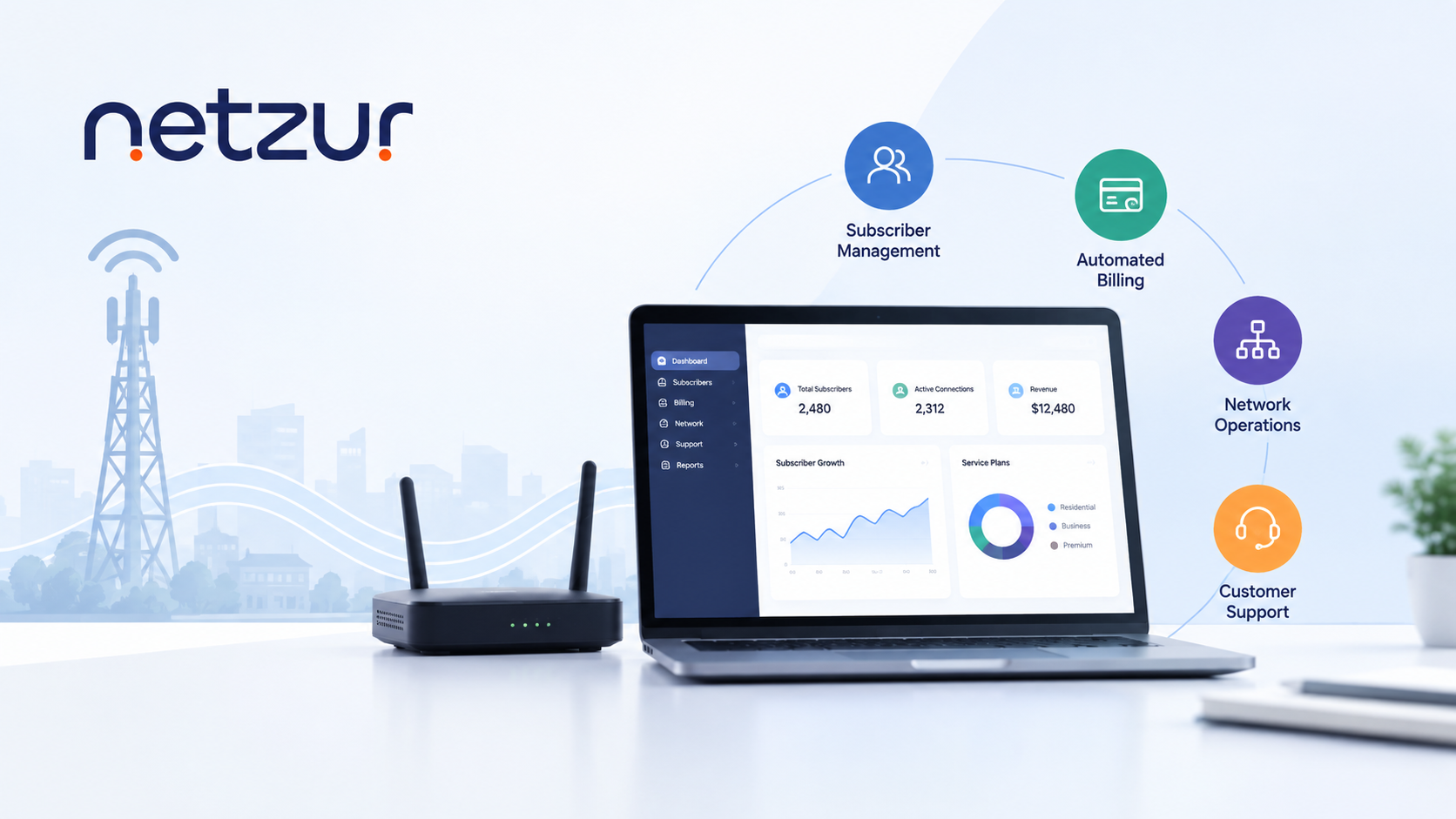
Subscriber management is one of the most important parts of running an ISP. Teams need to handle new registrations, plan upgrades, renewals, suspensions, connection details, KYC information, and customer requests.
ISP management software can centralize subscriber information in one place. Instead of maintaining separate spreadsheets or systems, teams can access customer profiles, plans, payment history, connection details, and service status through a unified dashboard.
This reduces duplicate data entry and makes it easier for sales, support, finance, and network teams to work with the same information.
2. Simplifies Billing and Payment Collection
Manual billing can create unnecessary administrative work, particularly when an ISP manages hundreds or thousands of subscribers. Generating invoices, tracking payment dates, handling renewals, and identifying unpaid accounts can quickly become complicated.
Modern ISP management software can automate recurring billing, invoice generation, payment tracking, plan renewals, and account status updates. Integration with online payment methods can also make it easier for customers to pay their bills.
For growing ISPs, this can reduce manual follow-ups while giving finance teams a clearer view of revenue and outstanding payments.
3. Connects Billing With Network Access
Billing and network management are closely connected. When a subscriber’s plan expires or changes, the network may need to update the customer’s access, speed, or service status.
An integrated ISP management platform can connect subscriber records and billing information with network authentication and access systems. This can help automate processes such as activation, suspension, renewal, and plan changes.
For example, when a customer renews a broadband plan, the system can update the relevant account information without requiring multiple teams to manually coordinate the change.
4. Improves Customer Support and Complaint Management
Customer support becomes increasingly challenging as an ISP grows. Complaints about connectivity, payments, installation, plan changes, and technical issues need to be tracked and assigned properly.
ISP management software can provide centralized ticketing and complaint management. Support teams can record customer issues, assign them to the appropriate team, track progress, and review previous interactions.
Having subscriber information and support history together can also help customer service teams understand the issue faster instead of asking customers to repeatedly provide the same details.
5. Supports Remote Device and Network Management
Modern broadband networks often involve a large number of customer-premises devices. Managing routers, ONUs, and other equipment individually can consume significant technical resources.
Protocols and platforms designed for remote device management can help ISPs configure, monitor, and maintain customer equipment more efficiently. The Broadband Forum explains that TR-069 was developed as a remote management platform that allows service providers to automatically recognize, provision, and maintain customer devices throughout their lifecycle.
For additional information about the evolution of TR-069 toward USP, see the Broadband Forum’s TR-069 and USP resources.
When integrated with broader ISP operations, remote device management can reduce repetitive technical tasks and improve operational visibility.
6. Provides Better Business and Network Insights
Making decisions based on scattered spreadsheets and disconnected systems can make it difficult for ISP managers to understand what is happening across the business.
ISP management software can bring operational information into dashboards and reports. Depending on the platform, managers can monitor subscriber growth, active and inactive users, revenue, payments, service plans, complaints, network information, and other key metrics.
These insights can help teams identify operational bottlenecks, understand customer behavior, and plan resources more effectively.
For example, an ISP can identify plans with high adoption, monitor overdue payments, analyze support requests, or review subscriber activity across different areas.
7. Helps ISPs Scale Operations
One of the biggest advantages of automation is scalability. An ISP may be able to manage a small subscriber base using spreadsheets and separate tools, but those processes can become difficult as the customer base grows.
A centralized ISP management system can help standardize workflows across subscriber management, billing, CRM, network operations, support, and reporting.
This becomes particularly important when an ISP expands into new locations or adds new broadband plans. Instead of increasing manual work at the same rate as subscriber growth, automation can help teams manage larger operations with more consistent processes.
Why Operational Efficiency Matters for Modern ISPs
Broadband customers increasingly expect clear pricing, reliable connectivity, convenient payments, and responsive support. Regulatory and market requirements can also increase the amount of information providers need to manage.
For example, the U.S. Federal Communications Commission’s broadband transparency framework requires providers to present important service information to consumers, with the rules updated in 2026.
ISPs can review the latest regulatory information through the U.S. Federal Communications Commission’s broadband consumer transparency resources.
While requirements vary by country and market, the broader lesson is relevant: accurate operational data and efficient information management are increasingly important for broadband businesses.
How Netzur Can Support ISP Operations
A centralized platform can help ISPs bring different operational processes together instead of relying on multiple disconnected tools. Netzur provides solutions covering areas such as subscriber management, ISP billing, CRM, network management, and other broadband operations.
By connecting these functions, ISPs can reduce repetitive administrative work, improve data visibility, and create more streamlined workflows across their teams.
Conclusion
Efficiency is essential for ISPs that want to manage growing subscriber bases without allowing operational complexity to grow at the same pace. From automated billing and subscriber management to customer support, network access, remote device management, and reporting, ISP management software can bring important processes together in one system.
For broadband businesses planning to expand in 2026, investing in centralized management and automation can help create more consistent operations and provide teams with better visibility into everyday ISP activities.
FAQs
What is ISP management software?
ISP management software is a platform designed to help internet service providers manage core operations such as subscribers, billing, payments, CRM, network access, customer support, and reporting from a centralized system.
How does ISP management software improve efficiency?
It can automate repetitive tasks such as billing, renewals, subscriber activation, payment tracking, and support workflows. This reduces manual work and allows teams to manage operations more systematically.
Can ISP management software integrate with network systems?
Many modern platforms can integrate with technologies used for authentication, access management, routers, and customer-premises equipment. Available integrations depend on the software and the ISP’s network infrastructure.
Is ISP management software suitable for small ISPs?
Yes. A scalable platform can help small ISPs organize subscriber information, billing, support, and network operations while providing a foundation for future growth.
What features should ISPs look for in management software?
Important features may include subscriber management, automated billing, CRM, payment integration, network authentication, ticketing, reporting, device management, role-based access, and integrations with existing network infrastructure.