Internet Service Providers (ISPs) are managing increasingly complex networks while customers expect faster activation, reliable connectivity, accurate billing, and responsive support. At the same time, service providers are moving away from fragmented legacy systems toward cloud-based, automated, and integrated platforms.
This shift is making subscriber management software an increasingly important part of modern ISP operations. Instead of handling customer information, subscriptions, billing, support, and service workflows across disconnected tools, ISPs can centralize these processes and create a more connected operational environment.
In 2026, the trend is moving beyond basic customer databases. Automation, cloud technology, AI, APIs, and integrated OSS/BSS platforms are influencing how ISPs manage subscribers and deliver services. TM Forum research describes the industry’s movement toward AI-supported, end-to-end automated operations, while Deloitte highlights cloud, SaaS, APIs, and modernization as important directions for telecom BSS/OSS.
What Is Subscriber Management Software?
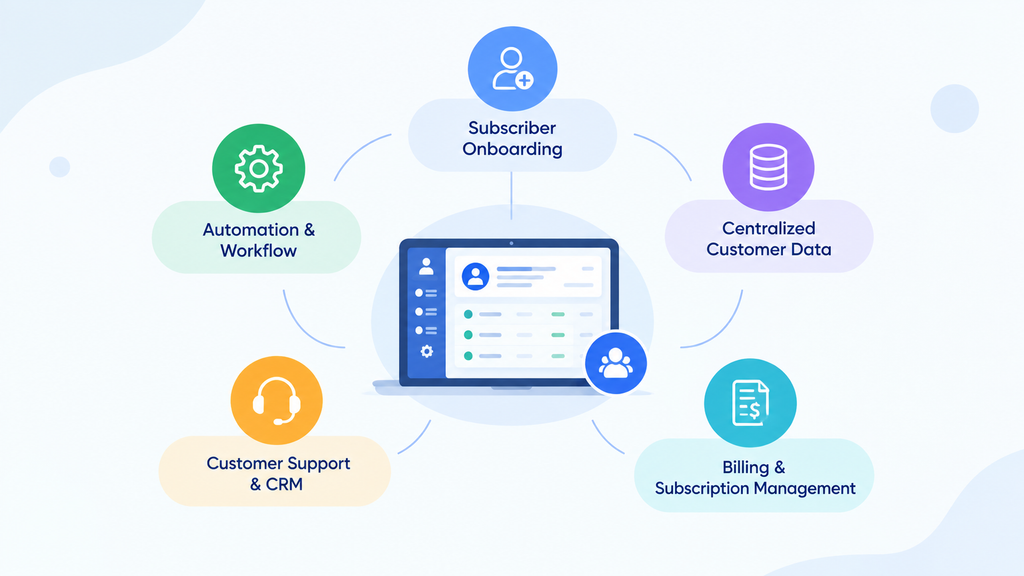
Subscriber management software is a platform designed to help ISPs organize and manage subscriber-related activities from a centralized system.
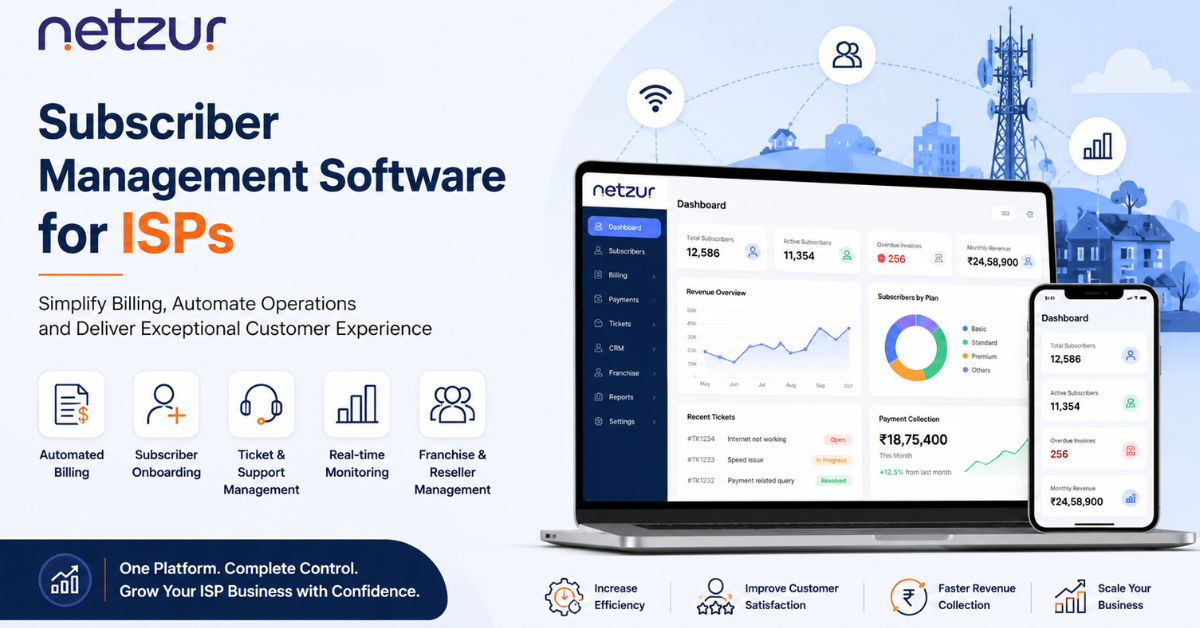
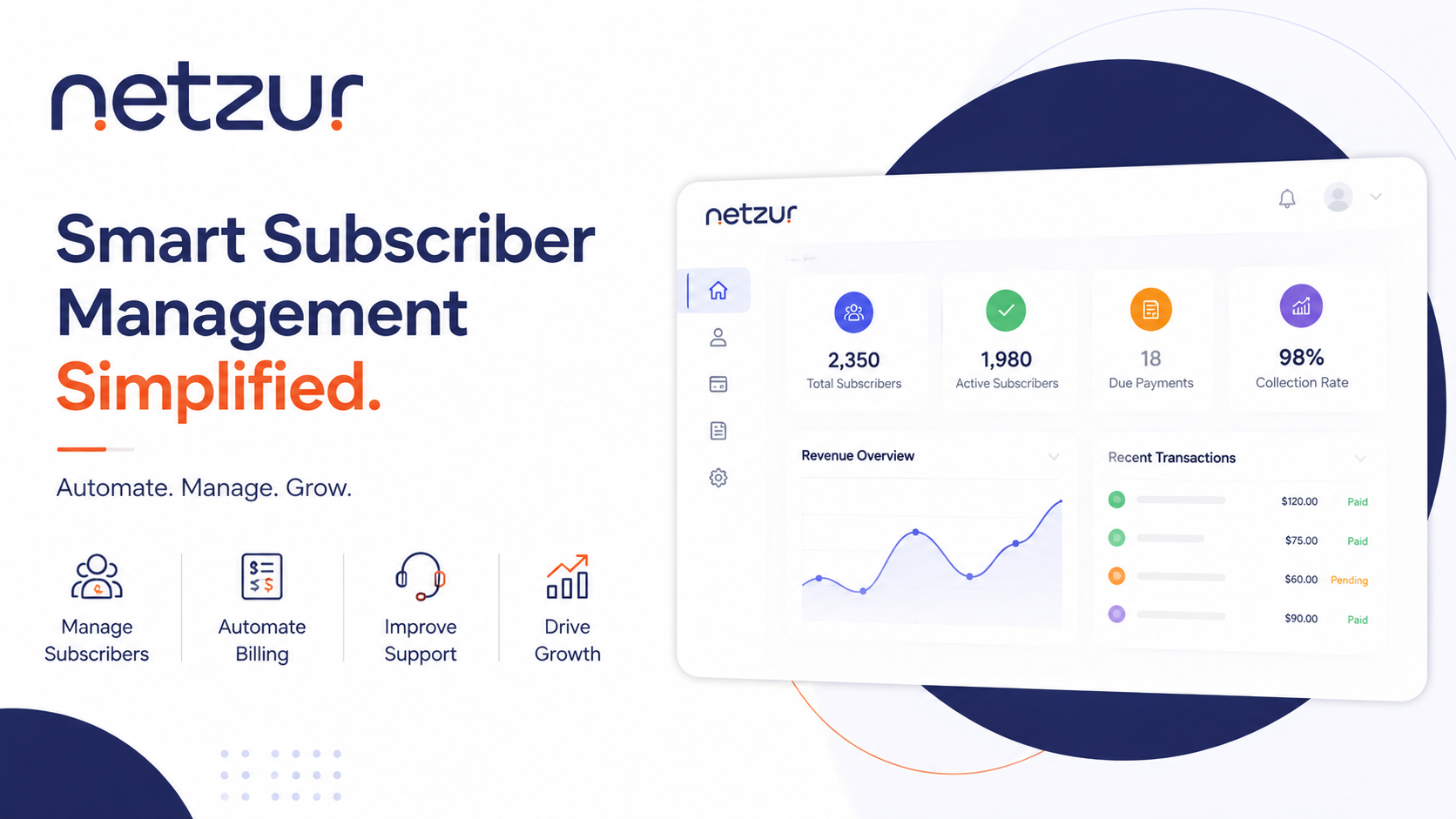
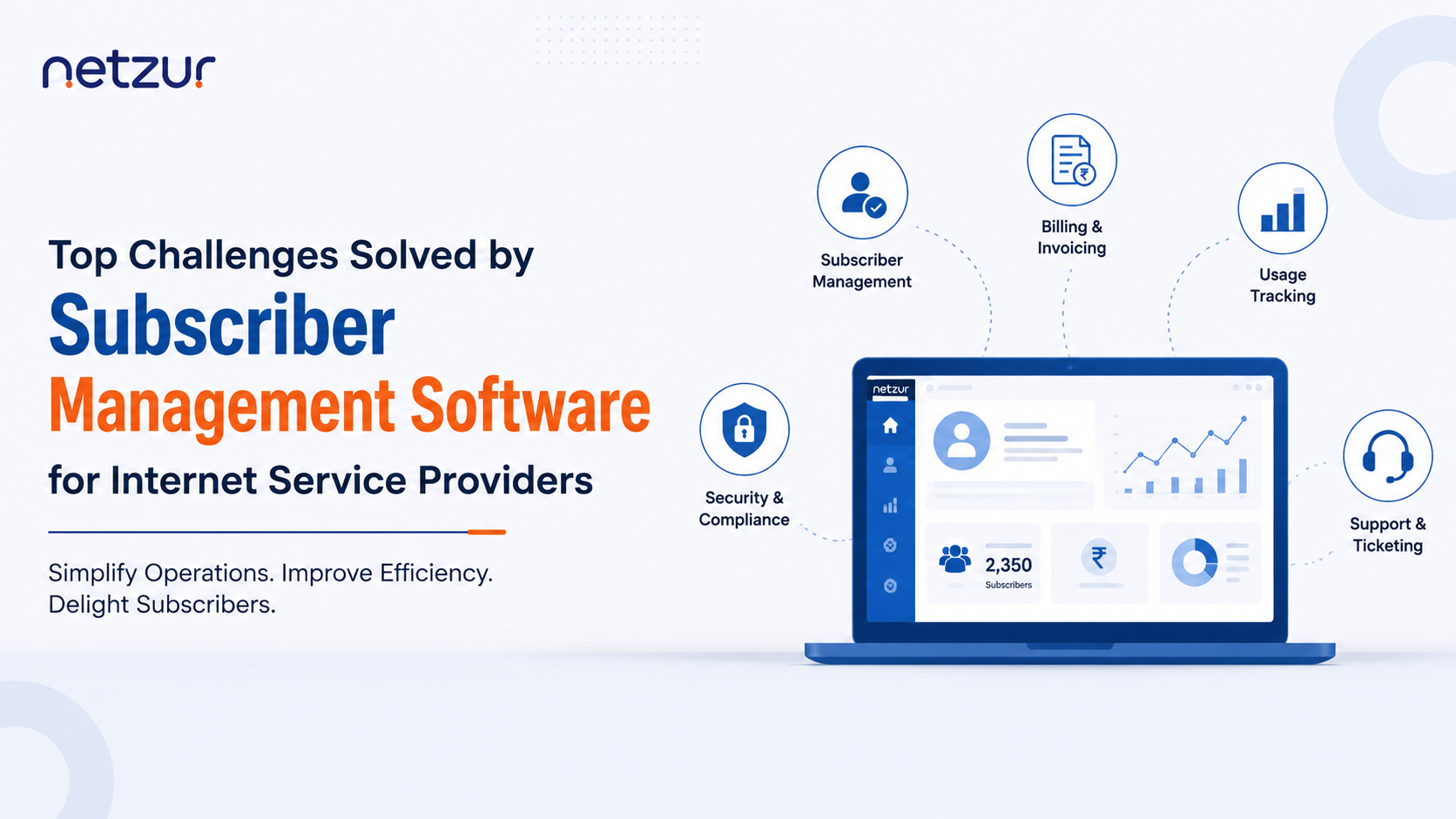
Depending on the platform, it can support subscriber registration, account management, service plans, authentication, billing information, payments, usage tracking, notifications, support workflows, and service activation.
For growing ISPs, this centralized approach can reduce repetitive manual work and give different teams access to consistent subscriber information.
Why Subscriber Management Software Matters for ISPs in 2026
1. Automation Is Becoming Essential
Manual subscriber management can become difficult when an ISP has thousands of customers, multiple service packages, recurring payments, and frequent service changes.
Modern platforms can automate repetitive workflows such as account creation, plan changes, payment-related actions, notifications, and service updates. This allows teams to spend less time moving information between systems and more time handling exceptions and customer needs.
Automation is also becoming a broader telecom trend. Industry research is increasingly focused on connecting IT and network systems to support more automated operations.
2. Centralized Subscriber Data Improves Visibility
When subscriber information is distributed across spreadsheets, billing tools, CRM systems, and network platforms, teams may struggle to get a complete view of an account.
Subscriber management software can bring important information together, including:
- Subscriber profiles
- Service packages
- Account status
- Billing information
- Usage details
- Payment history
- Support information
- Connection and service details
A centralized view can help customer service, sales, finance, and technical teams work with more consistent information.
3. Faster Service Activation and Changes
Customers increasingly expect services to become available quickly after signup or plan changes.
An integrated subscriber management platform can connect customer and service information with provisioning and network workflows. This can help reduce unnecessary manual steps when activating new customers, changing packages, suspending services, or reconnecting accounts.
The broader telecom industry is also moving toward service-centric operations, where provisioning, fulfillment, and assurance become more closely connected.
4. Better Billing and Subscription Management
Billing is one of the most important areas of ISP operations. Incorrect plans, missed payments, outdated subscriber information, or disconnected billing and service records can create operational problems.
Subscriber management software can help ISPs maintain accurate subscription information and connect billing processes with subscriber accounts.
This becomes especially valuable for ISPs offering multiple packages, recurring subscriptions, promotional plans, upgrades, or different billing cycles.
5. Cloud and API Integration Are Changing ISP Platforms
Cloud-based platforms are becoming increasingly important as telecom companies modernize their technology infrastructure. Deloitte reports that cloudification and SaaS adoption in BSS/OSS are growing faster than the broader BSS/OSS market.
For ISPs, cloud-based subscriber management can support easier scalability, centralized access, and integration with other business and network applications.
APIs can further connect subscriber management with systems such as:
- CRM platforms
- Billing systems
- RADIUS servers
- Network monitoring tools
- Payment gateways
- Notification platforms
- Provisioning systems
For organizations exploring modern telecom architecture, TM Forum’s Open Digital Architecture resources provide industry guidance around cloud-based, modular, and API-enabled approaches.
AI and Intelligent Automation: The Next Step
AI is becoming another important component of telecom modernization. Instead of simply storing subscriber information, future platforms can increasingly use operational data to identify patterns, support customer service, automate routine actions, and assist teams with decision-making.
For example, AI-assisted systems could help identify unusual account activity, prioritize customer issues, or provide insights into subscriber behavior.
Deloitte notes that AI is increasingly being applied across telecom operations, including automated provisioning, network operations, and customer-related processes.
However, AI works best when it is connected to reliable and well-structured operational data. This makes centralized subscriber information an important foundation for future automation.
How to Choose Subscriber Management Software
Before selecting a platform, ISPs should evaluate whether it can support their current requirements while remaining flexible as the subscriber base grows.
Important considerations include:
- Subscriber and account management
- Billing and subscription capabilities
- RADIUS or authentication integration
- CRM functionality
- Network and provisioning integration
- API availability
- Automation capabilities
- Cloud scalability
- Reporting and analytics
- Role-based access and security
- Notification and communication options
The right solution should connect business processes with technical operations rather than creating another isolated system.
For additional industry standards and telecom architecture guidance, TM Forum is a useful high-authority resource for exploring modern OSS/BSS and Open API approaches.
The Future of Subscriber Management
The future of ISP subscriber management is moving toward greater automation, integration, and intelligence. Instead of treating subscriber information as a standalone administrative function, modern platforms are increasingly becoming part of a connected operational ecosystem.
Cloud infrastructure, APIs, AI, automated provisioning, and integrated OSS/BSS can help ISPs build more responsive workflows while reducing dependency on manual processes.
For ISPs planning to scale in 2026 and beyond, investing in connected subscriber operations can provide a foundation for managing customers, services, billing, and network processes more efficiently.
Conclusion
As ISP networks and customer expectations continue to evolve, subscriber management software is becoming more than a tool for maintaining customer records. It can serve as a central layer connecting subscriber information, billing, CRM, authentication, service management, and operational workflows.
Platforms such as Netzur are designed to bring these ISP management capabilities together, helping service providers create a more centralized and automated approach to subscriber operations.