Reliable internet connectivity is no longer just a basic business requirement. As organizations manage more connected devices, remote locations, cloud applications, and customer-facing digital services, traditional network management can become difficult to scale. This is where cloud WiFi solutions are changing how businesses build, manage, and secure their networks.
From hotels and retail stores to offices, campuses, and multi-location businesses, cloud-managed networks provide greater visibility and control without requiring IT teams to manually manage every access point on-site. In 2026, the growing adoption of cloud platforms, IoT devices, and AI-powered network monitoring is making cloud-based connectivity even more important.
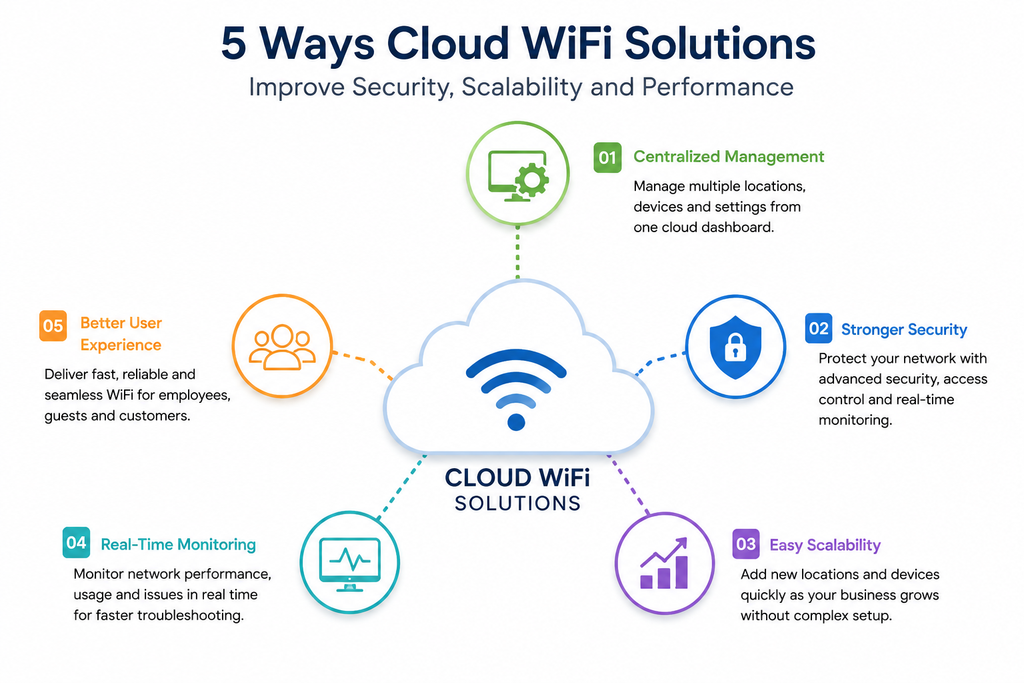
Here are five ways cloud WiFi solutions can help businesses improve security, scalability, and overall network performance.
1. Centralized Network Management Simplifies Operations
Managing WiFi across multiple locations can be time-consuming when each network requires separate configuration and on-site maintenance. Cloud WiFi platforms allow administrators to manage connected locations through a centralized dashboard.
Instead of visiting each location to change network settings, IT teams can remotely configure access points, update policies, monitor device status, and troubleshoot issues.
This centralized approach offers several advantages:
- Manage multiple locations from one platform
- Configure WiFi settings remotely
- Monitor network activity in real time
- Reduce manual IT workloads
- Apply consistent policies across locations
For businesses operating hotels, retail chains, offices, or public WiFi networks, centralized management creates a more efficient way to maintain consistent connectivity.
As organizations continue adopting cloud infrastructure, solutions that provide remote management and real-time visibility are becoming an essential part of modern IT operations.
2. Stronger Security Helps Protect Networks and Users
Cybersecurity remains a major concern for businesses offering employee, customer, or guest WiFi. A poorly managed network can create security risks, especially when multiple users and devices connect every day.
Cloud WiFi solutions can make it easier to implement and manage security policies across the entire network. Administrators can monitor connected devices, control user access, segment networks, and respond to suspicious activity from a centralized system.
For example, businesses can create separate networks for employees, guests, and internal devices. This helps reduce unnecessary access between different types of users and connected systems.
Important security capabilities may include:
- Network segmentation
- User authentication and access control
- Centralized security policy management
- Remote firmware and software updates
- Real-time monitoring and alerts
Following established cybersecurity guidance is also important when building a secure wireless environment. Businesses can refer to NIST cybersecurity resources for frameworks and best practices related to managing cybersecurity risks.
With centralized visibility, IT teams can identify potential issues faster and maintain more consistent security standards across every location.
3. Easy Scalability Supports Business Growth
As businesses expand, their network requirements also change. Opening a new branch, adding more users, or deploying hundreds of new connected devices can place additional pressure on traditional network infrastructure.
One of the biggest advantages of cloud WiFi solutions is scalability.
Businesses can add new access points and locations without rebuilding the entire management structure. Once devices are connected to the cloud management platform, administrators can configure and monitor them remotely.
This is particularly useful for:
- Growing retail chains
- Hotel groups
- Educational institutions
- Corporate offices
- Co-working spaces
- Multi-location service businesses
A scalable network makes it easier to adapt to changing demands. Whether a business adds one new location or expands to dozens, cloud-based management provides a consistent way to deploy and control the network.
The growing number of connected devices also makes scalable network infrastructure increasingly important. Resources from Cisco’s networking insights highlight the continued evolution of enterprise networking as organizations support more users, devices, and digital services.
4. Real-Time Monitoring Improves Network Performance
Slow WiFi and connectivity interruptions can affect productivity, customer satisfaction, and daily business operations. Traditional troubleshooting often begins only after users report a problem.
Cloud-managed WiFi creates a more proactive approach.
Network administrators can monitor access points, bandwidth usage, connected devices, and overall network health from a centralized dashboard. When unusual activity or performance issues occur, alerts can help IT teams investigate problems before they affect a larger number of users.
Real-time monitoring can help businesses:
- Identify overloaded access points
- Detect unusual bandwidth usage
- Monitor connected devices
- Troubleshoot network issues remotely
- Improve WiFi coverage and performance
This visibility is especially valuable for businesses that depend on uninterrupted connectivity. Hotels need reliable guest WiFi, retailers rely on connected payment and business systems, and offices require stable access to cloud applications.
By understanding how the network is being used, businesses can make more informed decisions about capacity planning and infrastructure upgrades.
5. Better User Experiences Support Digital-First Businesses
Today, WiFi is often part of the customer experience.
Guests expect reliable connectivity in hotels. Shoppers may use WiFi while browsing digital offers. Employees depend on wireless networks for cloud applications and collaboration. In public spaces, reliable internet access can directly influence how users experience a location.
Cloud WiFi solutions help businesses maintain more consistent network experiences by providing centralized visibility and easier performance management.
Organizations can monitor usage patterns, manage access, and optimize connectivity based on changing requirements. For businesses offering guest WiFi, cloud-based platforms can also support more controlled and organized access management.
As AI-powered analytics and automation become more common, the future of WiFi management is expected to become increasingly proactive. Networks will not only report problems but may also help administrators identify patterns and respond more quickly to potential performance issues.
This shift is making cloud-managed connectivity an important part of the broader move toward smarter, more automated business infrastructure.
The Future of Cloud-Managed Connectivity
In 2026, businesses are managing more connected devices than ever before. Cloud applications, IoT technology, hybrid work environments, and customer-facing digital services are increasing the demand for flexible network infrastructure.
The future of wireless networking is likely to focus on three major areas: automation, visibility, and security.
Cloud-managed platforms provide businesses with the flexibility to monitor networks remotely while supporting expansion across multiple locations. Instead of treating WiFi as a basic utility, organizations can use network data and centralized management to improve operations and user experiences.
Businesses that invest in scalable and secure connectivity today will be better prepared for future technology demands.
Conclusion
Cloud WiFi solutions offer businesses a smarter way to manage modern network infrastructure. From centralized management and stronger security to easy scalability, real-time monitoring, and improved user experiences, cloud-based WiFi is helping organizations move beyond traditional network management.
For businesses looking to simplify WiFi operations and manage connectivity across multiple locations, Netzur offers solutions designed to support efficient, centralized network management and evolving business connectivity needs.
FAQ
1. What are cloud WiFi solutions?
Cloud WiFi solutions allow businesses to manage and monitor wireless networks through a cloud-based platform. Administrators can remotely configure access points, monitor performance, manage users, and apply network policies from a centralized dashboard.
2. Are cloud WiFi solutions suitable for multi-location businesses?
Yes. Cloud-managed WiFi is particularly useful for businesses with multiple locations because network administrators can manage, configure, and monitor different sites remotely through a centralized platform, helping maintain consistent security and performance standards.