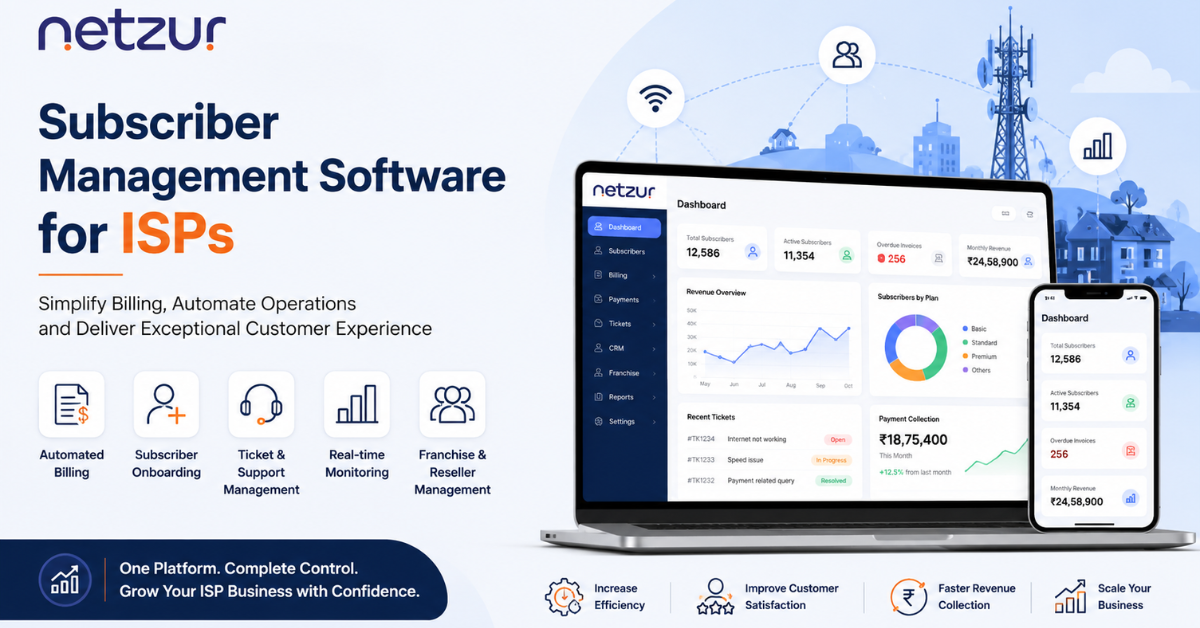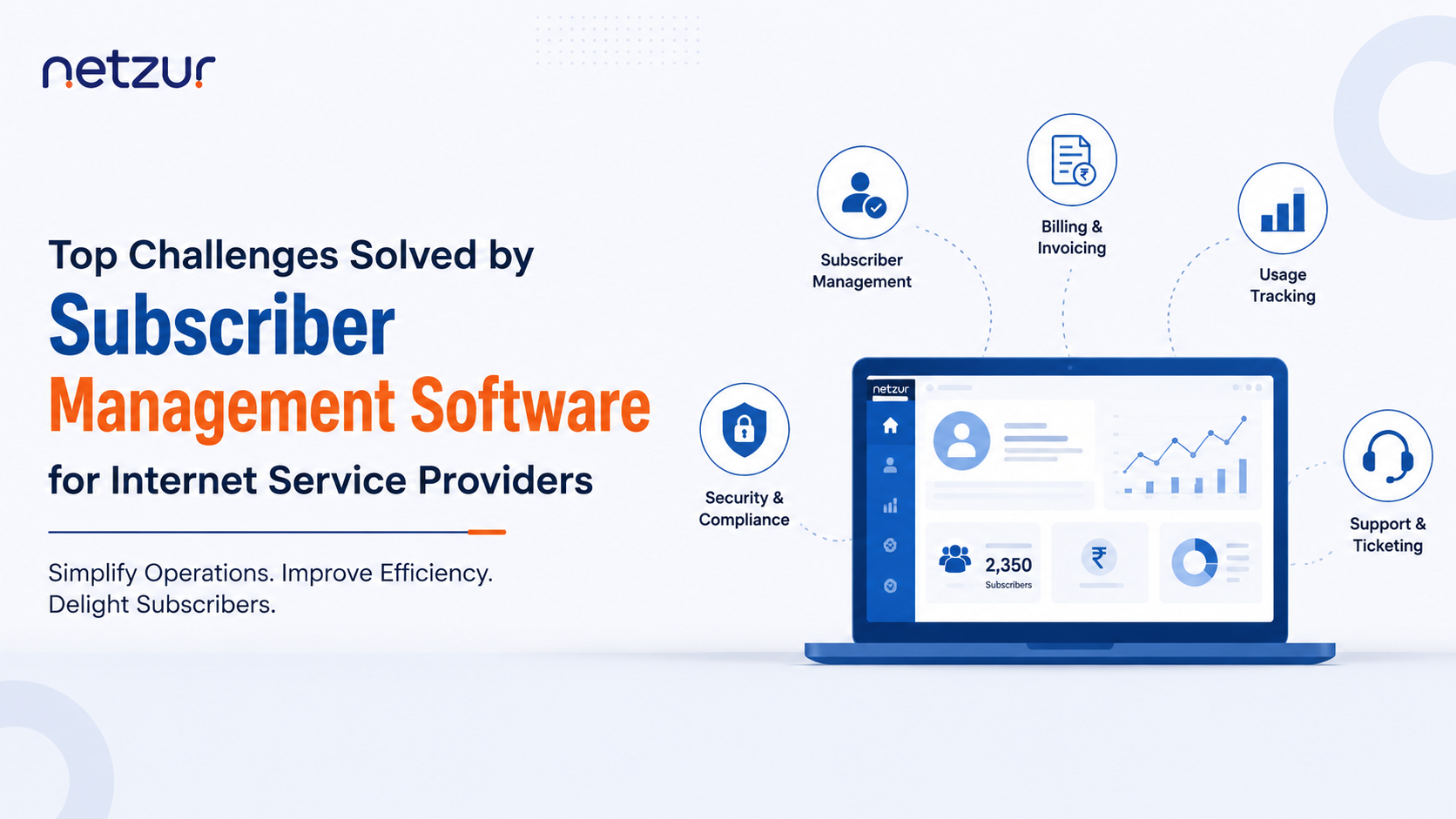
As internet usage continues to grow, Internet Service Providers (ISPs) face increasing pressure to manage subscribers efficiently while delivering uninterrupted connectivity. Handling customer onboarding, authentication, billing, service provisioning, and support manually can quickly become overwhelming as subscriber numbers increase.
This is where subscriber management software becomes an essential solution. It centralizes subscriber information, automates daily operations, and helps ISPs deliver a seamless customer experience while reducing operational costs.
In this article, we’ll explore the biggest challenges faced by ISPs and how subscriber management software solves them.
1. Managing a Growing Subscriber Base
One of the biggest challenges for ISPs is handling thousands of subscribers efficiently. Manual spreadsheets and disconnected systems often lead to duplicate records, errors, and delayed customer service.
Subscriber management software stores all customer information in one centralized platform, including:
- Customer profiles
- Active plans
- Service history
- Usage information
- Payment records
This allows customer support teams to access subscriber details instantly, improving response times and reducing administrative work.
2. Slow Subscriber Provisioning
Customers expect internet services to be activated immediately after registration. Manual provisioning increases delays and often results in configuration errors.
Modern subscriber management software automates the entire activation process by integrating with network infrastructure.
Benefits include:
- Faster customer onboarding
- Automatic plan assignment
- Reduced human errors
- Instant service activation
Automation improves operational efficiency while enhancing the customer experience.
3. Authentication and Network Security
Unauthorized access remains a major concern for broadband providers. Without proper authentication systems, networks become vulnerable to misuse and revenue loss.
Subscriber management software integrates with authentication technologies such as RADIUS servers and AAA frameworks to verify user identities before granting internet access.
Key security advantages include:
- Secure subscriber authentication
- Centralized access control
- Session management
- Improved network protection
For a better understanding of secure authentication systems, explore the AAA Authentication Protocol by the Internet Engineering Task Force (IETF).
4. Billing Errors and Revenue Leakage
Manual billing processes often create inaccurate invoices, delayed payments, and customer disputes.
Subscriber management software automates billing based on:
- Active plans
- Data consumption
- Subscription period
- Taxes
- Additional services
Automated billing helps ISPs:
- Generate accurate invoices
- Reduce revenue leakage
- Improve payment tracking
- Simplify financial reporting
This creates a more reliable billing workflow while improving customer trust.
5. Handling Customer Support Efficiently
As subscriber numbers increase, customer inquiries also rise. Searching through multiple systems for subscriber information slows support teams and frustrates customers.
Subscriber management software provides customer support representatives with complete subscriber information from one dashboard.
Support teams can quickly:
- Verify customer identity
- Check service status
- Update plans
- View payment history
- Resolve technical issues faster
This leads to shorter resolution times and improved customer satisfaction.
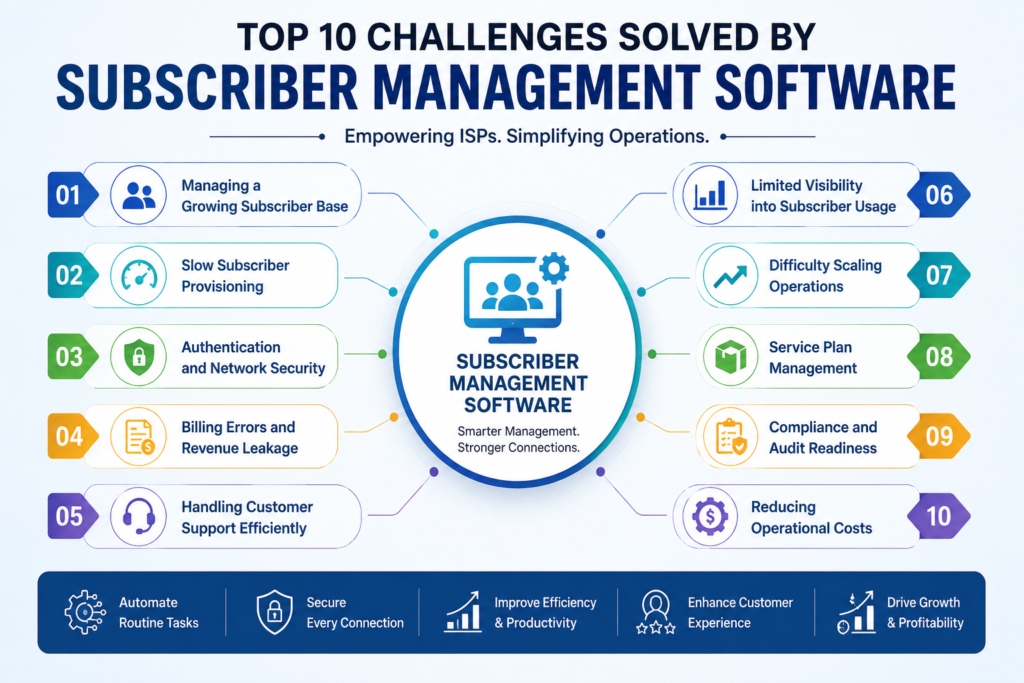
6. Limited Visibility into Subscriber Usage
Understanding subscriber behavior helps ISPs optimize services and improve network planning.
Subscriber management software offers real-time insights into:
- Active subscribers
- Bandwidth consumption
- Peak usage hours
- Plan performance
- Customer trends
These analytics enable providers to make informed business decisions while improving service quality.
For additional best practices on broadband network management, refer to the Broadband Forum, a global organization focused on broadband standards.
7. Difficulty Scaling Operations
Many ISPs start with basic customer management tools but struggle as their business grows.
Subscriber management software is designed to scale with business growth by supporting:
- Multiple locations
- Large subscriber databases
- Automated workflows
- Flexible service plans
- Integration with billing and authentication systems
This ensures providers can expand without significantly increasing operational complexity.
8. Service Plan Management
Managing multiple broadband packages manually becomes increasingly difficult as new plans and promotional offers are introduced.
Subscriber management software simplifies:
- Plan creation
- Speed upgrades
- Package modifications
- Promotional offers
- Service renewals
Subscribers receive the correct services while administrators spend less time making manual updates.
9. Compliance and Audit Readiness
Telecom providers often need detailed subscriber records for auditing and regulatory compliance.
Subscriber management software automatically maintains logs of:
- Login history
- Authentication records
- Billing transactions
- Plan changes
- Customer activities
These records simplify compliance reporting and reduce administrative effort during audits.
10. Reducing Operational Costs
Hiring additional staff to manage subscriber growth is expensive and often unnecessary when repetitive tasks can be automated.
Subscriber management software reduces operational expenses by automating:
- Subscriber onboarding
- Billing
- Authentication
- Notifications
- Account management
- Reporting
Automation allows ISP teams to focus on business growth rather than repetitive administrative tasks.
Why Subscriber Management Software Is Becoming Essential
Today’s subscribers expect instant activation, accurate billing, reliable internet connectivity, and responsive customer support. Meeting these expectations manually is becoming increasingly difficult for ISPs of every size.
Subscriber management software combines customer management, authentication, provisioning, billing, analytics, and reporting into a single platform, allowing providers to operate more efficiently while delivering better customer experiences.
As broadband adoption continues to grow, investing in intelligent subscriber management is becoming a competitive advantage rather than simply an operational improvement.
Conclusion
Managing subscribers efficiently is critical for every modern ISP. From automated onboarding and secure authentication to billing accuracy and real-time analytics, subscriber management software addresses the most common operational challenges while supporting scalable growth. Platforms like Netzur help service providers streamline subscriber management, improve customer satisfaction, and build a more efficient broadband business.
FAQs
1. What is subscriber management software?
Subscriber management software is a centralized platform that helps Internet Service Providers manage customer onboarding, authentication, billing, service provisioning, usage monitoring, and support from a single system.
2. Why do ISPs need subscriber management software?
ISPs use subscriber management software to automate routine operations, improve billing accuracy, enhance network security, reduce manual workload, and deliver a better customer experience.