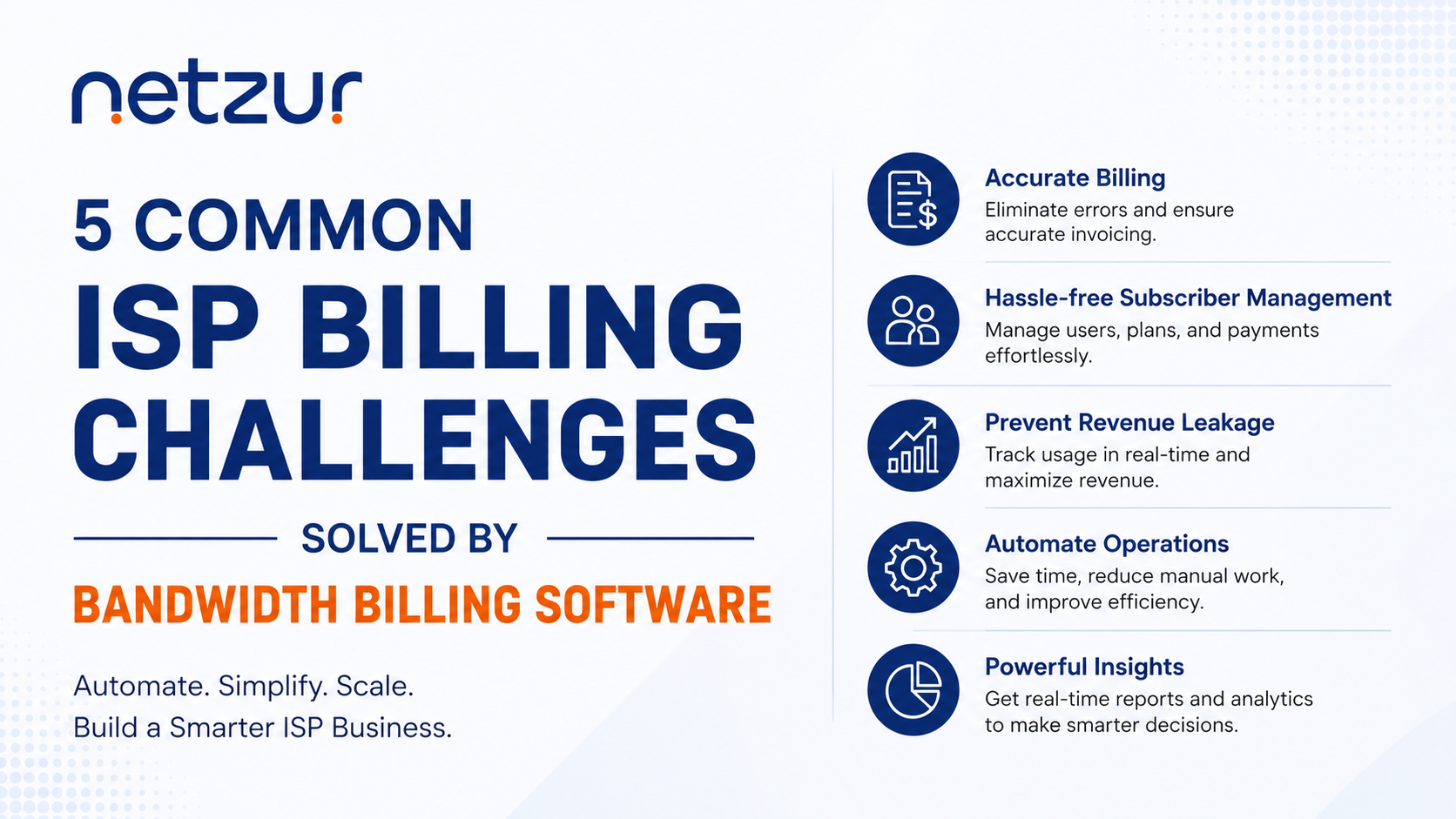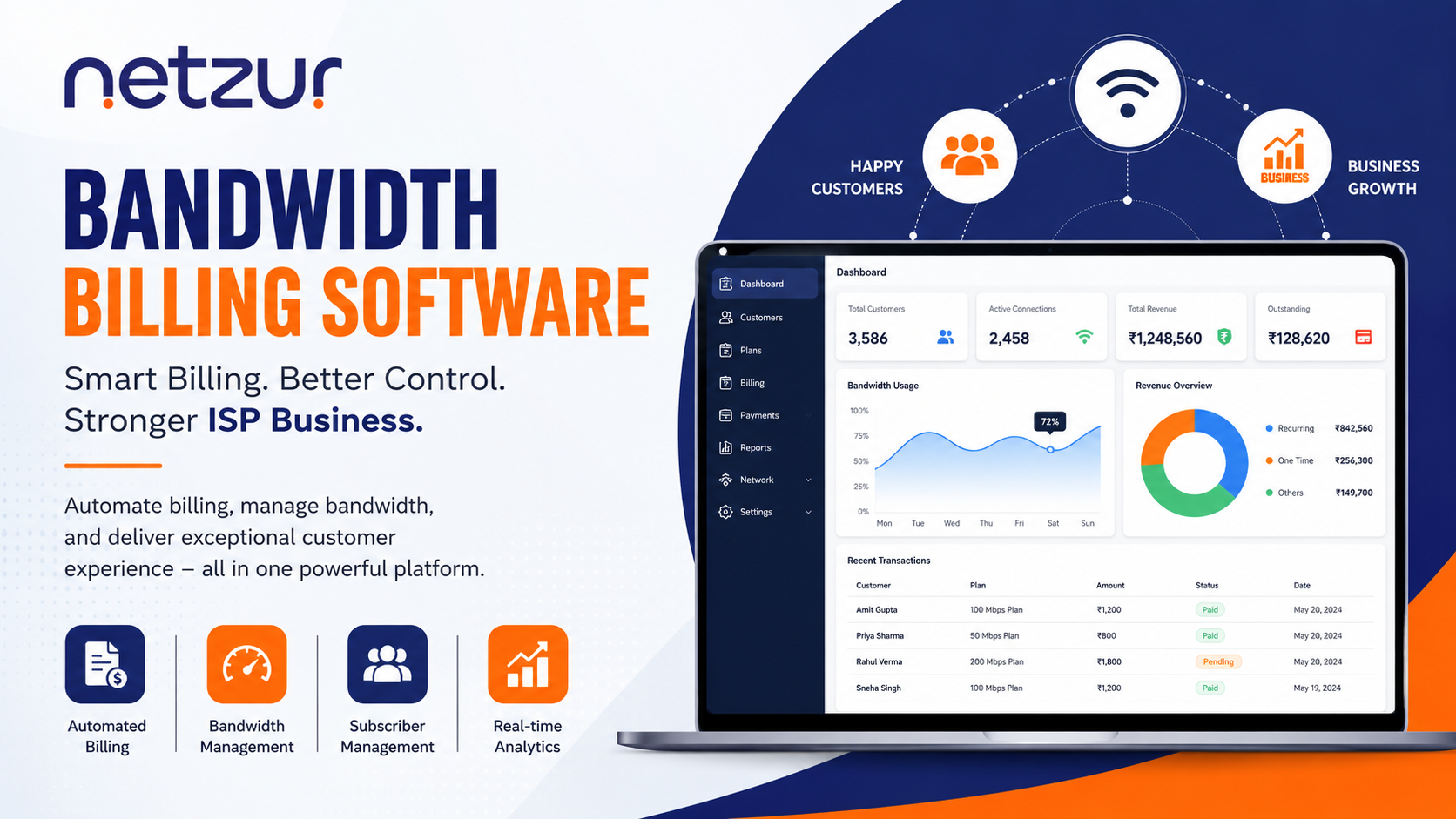
As internet consumption continues to rise globally, Internet Service Providers (ISPs) face increasing pressure to deliver seamless connectivity while maintaining profitability. Managing subscribers, monitoring data usage, controlling bandwidth allocation, and generating accurate invoices manually is no longer practical.
This is where bandwidth billing software becomes essential.
Modern ISPs require intelligent systems that combine billing automation, customer management, bandwidth control, and network monitoring into a single platform. The right solution can reduce operational costs, improve customer satisfaction, and help providers scale efficiently.
In this guide, we’ll explore why bandwidth billing software has become a critical investment for ISPs and what features to look for when selecting the best solution.
What Is Bandwidth Billing Software?
Bandwidth billing software is a specialized platform designed to automate billing based on internet usage, subscription plans, bandwidth allocation, and service packages.
Instead of manually calculating customer charges, the software automatically tracks usage data and generates invoices based on predefined billing rules.
Most modern platforms also function as ISP billing and bandwidth management software, allowing providers to:
- Monitor subscriber usage
- Control bandwidth allocation
- Manage prepaid and postpaid plans
- Generate invoices automatically
- Handle payment collections
- Track customer accounts
- Produce business reports
By integrating billing and bandwidth management, ISPs can streamline operations while ensuring accurate revenue tracking.
Why ISPs Are Adopting Advanced Billing Systems
The ISP industry is becoming increasingly competitive. Customers expect transparent billing, flexible plans, and uninterrupted internet access.
Manual processes often result in:
- Billing errors
- Revenue leakage
- Delayed payments
- Customer complaints
- Administrative inefficiencies
Advanced billing platforms help providers overcome these challenges through automation and real-time network visibility.
Following Internet infrastructure best practices helps ISPs build reliable networks, improve service quality, and support long-term business growth.
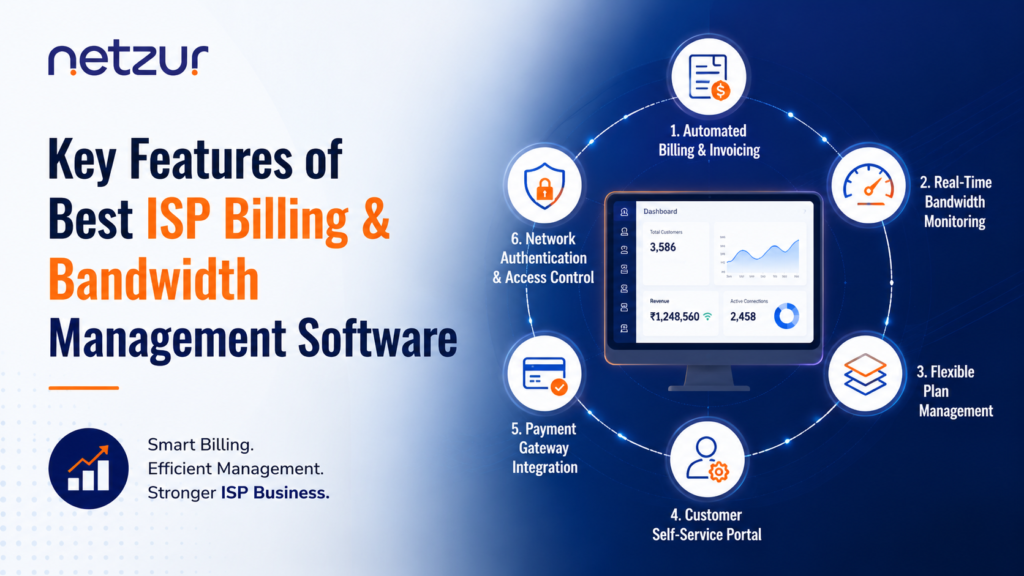
Key Features of the Best ISP Billing and Bandwidth Management Software
1. Automated Billing and Invoicing
Automation eliminates repetitive administrative tasks and reduces human errors.
The software should support:
- Recurring billing
- Usage-based billing
- Tax calculations
- Invoice generation
- Payment reminders
- Subscription renewals
This ensures customers receive accurate invoices every billing cycle.
2. Real-Time Bandwidth Monitoring
Real-time monitoring allows ISPs to track bandwidth consumption across their network.
Benefits include:
- Faster troubleshooting
- Better resource allocation
- Reduced congestion
- Improved service quality
Administrators can instantly identify heavy users and optimize network performance.
3. Flexible Plan Management
Customer requirements vary significantly.
A robust solution should allow providers to create:
- Unlimited plans
- Data-capped packages
- Speed-based plans
- Time-based plans
- Business internet packages
This flexibility helps ISPs target different customer segments effectively.
4. Customer Self-Service Portal
Today’s subscribers expect digital convenience.
Self-service portals enable customers to:
- View invoices
- Check usage statistics
- Make payments
- Upgrade plans
- Raise support tickets
This reduces support workload while improving customer satisfaction.
5. Payment Gateway Integration
Seamless payment processing is essential for maintaining healthy cash flow.
The best systems support:
- Credit cards
- Online banking
- Digital wallets
- Automated payment collection
Integration with multiple payment gateways improves customer convenience and reduces overdue payments.
6. Network Authentication and Access Control
Integration with technologies such as RADIUS authentication allows ISPs to automate user access management.
The Internet Engineering Task Force has established protocols that support secure subscriber authentication and network access control.
This feature helps providers:
- Activate services automatically
- Suspend overdue accounts
- Manage user access securely
- Reduce manual intervention
Many modern platforms integrate with RADIUS authentication standards to automate subscriber authentication, authorization, and accounting processes.
Business Benefits of Bandwidth Billing Software
Increased Revenue Accuracy
Automated billing minimizes errors and ensures every service provided is billed correctly.
This reduces revenue leakage and improves profitability.
Lower Operational Costs
Manual billing processes require significant administrative effort.
Automation reduces staffing requirements and allows teams to focus on growth-oriented activities.
Improved Customer Experience
Customers appreciate transparent billing and easy account management.
Accurate invoices and self-service tools contribute to stronger customer relationships and lower churn rates.
Better Decision-Making
Comprehensive reporting helps managers analyze:
- Subscriber growth
- Revenue trends
- Bandwidth usage
- Payment performance
Data-driven insights enable smarter business decisions.
Scalability
As subscriber numbers grow, billing complexity increases.
The right software can support thousands of users without significantly increasing operational workload.
How to Choose the Best ISP Billing and Bandwidth Management Software
When evaluating solutions, consider the following:
Ease of Deployment
The platform should be easy to configure and integrate with your existing network infrastructure.
Automation Capabilities
Look for advanced automation features that reduce manual tasks.
Security Standards
Customer data and payment information must be protected through robust security measures.
Reporting and Analytics
Detailed reporting provides visibility into network and business performance.
Vendor Support
Reliable technical support is essential for minimizing downtime and resolving issues quickly.
Future Scalability
Choose a solution that can accommodate business growth without requiring a complete system replacement.
Emerging Trends in ISP Billing for 2026
The ISP software market is evolving rapidly.
Key trends include:
- AI-powered usage analytics
- Predictive customer support
- Cloud-based billing platforms
- Automated service provisioning
- Real-time network intelligence
- Advanced fraud detection
Providers adopting these technologies are better positioned to improve efficiency and maintain competitive advantages.
Conclusion
As internet demand continues to grow, ISPs need smarter tools to manage subscribers, optimize bandwidth, and streamline billing operations. Investing in reliable bandwidth billing software enables providers to automate processes, improve customer experiences, and scale their businesses efficiently.
For ISPs seeking a comprehensive solution that combines billing automation, subscriber management, and bandwidth control, platforms like NetZur can help simplify operations and support long-term growth.
FAQs
1. What is bandwidth billing software used for?
Bandwidth billing software automates subscriber billing, tracks internet usage, manages bandwidth allocation, and generates accurate invoices for ISP customers.
2. What makes the best ISP billing and bandwidth management software?
The best solutions offer automated billing, bandwidth monitoring, payment integration, customer self-service portals, detailed reporting, and scalable network management capabilities.