
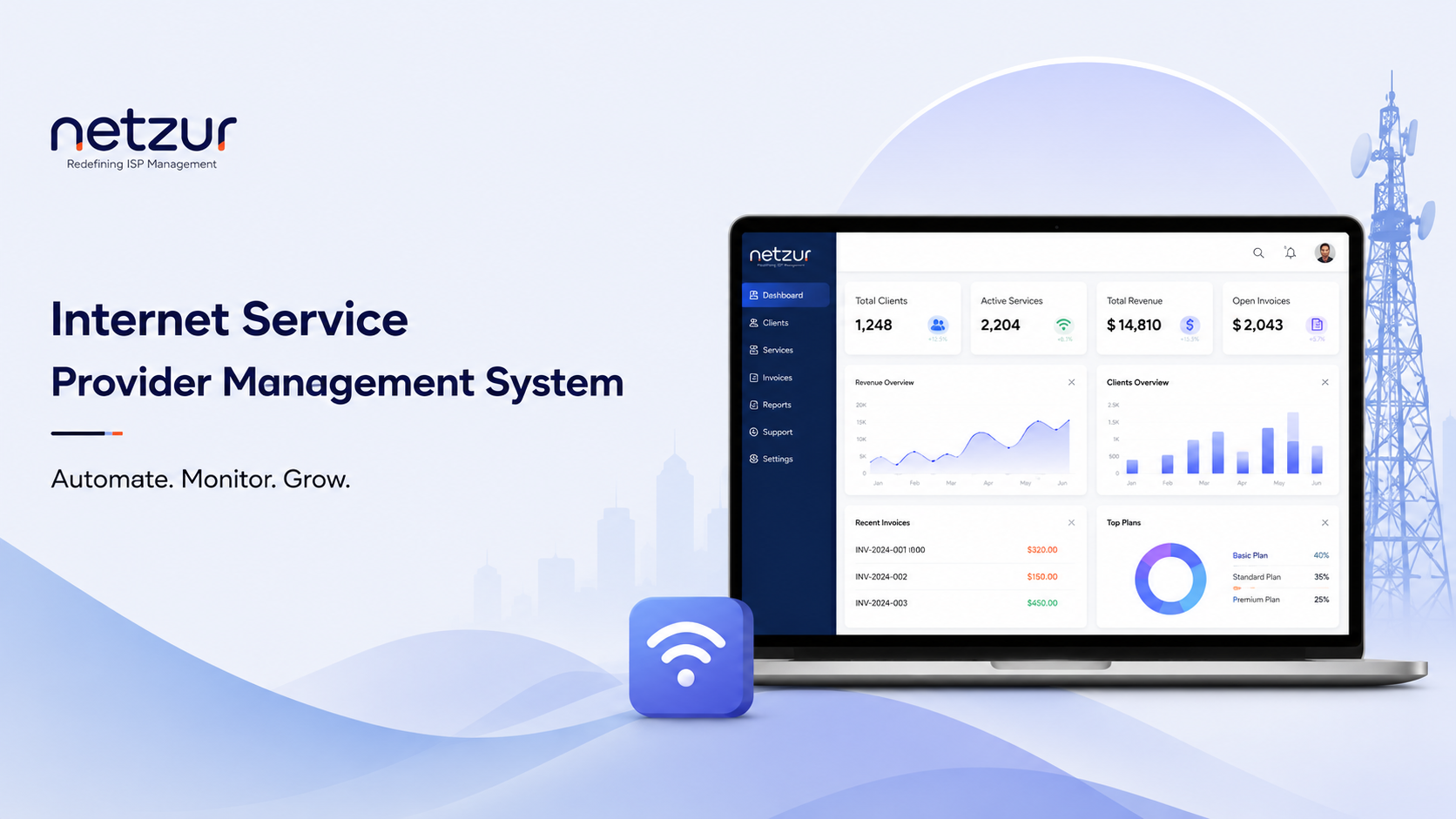
The internet industry is evolving rapidly, and Internet Service Providers (ISPs) are facing increasing challenges in managing subscribers, billing operations, network performance, and customer support. As customer expectations continue to rise, relying on manual processes or outdated software can significantly impact efficiency and profitability.
This is where an Internet Service Provider Management System becomes essential. Modern ISP management solutions help providers automate daily operations, improve customer experiences, and scale their businesses efficiently.
In 2026, automation, real-time analytics, AI-powered monitoring, and seamless customer management are shaping the future of ISP operations. Businesses that invest in a robust ISP management platform gain a competitive advantage in a highly demanding market.
What is an Internet Service Provider Management System?
An Internet Service Provider Management System is a comprehensive software solution designed to manage and automate ISP operations. It integrates multiple functions such as:
- Subscriber Management
- Billing and Invoicing
- Bandwidth Management
- Customer Relationship Management (CRM)
- Network Monitoring
- Ticketing and Support
- Payment Collection
- Reporting and Analytics
By centralizing these operations into a single platform, ISPs can reduce operational complexity and focus on delivering high-quality internet services.
Why ISPs Need Advanced Management Systems in 2026
The demand for reliable internet connectivity continues to increase due to:
- Remote work environments
- Online education
- Streaming services
- Smart homes and IoT devices
- Cloud-based businesses
Managing thousands of subscribers manually is no longer practical. Modern ISP businesses require intelligent software solutions that can automate processes and provide real-time insights.
An advanced Internet Service Provider Management System helps businesses:
- Minimize billing errors
- Improve customer satisfaction
- Monitor network performance proactively
- Reduce operational costs
- Scale subscriber growth efficiently
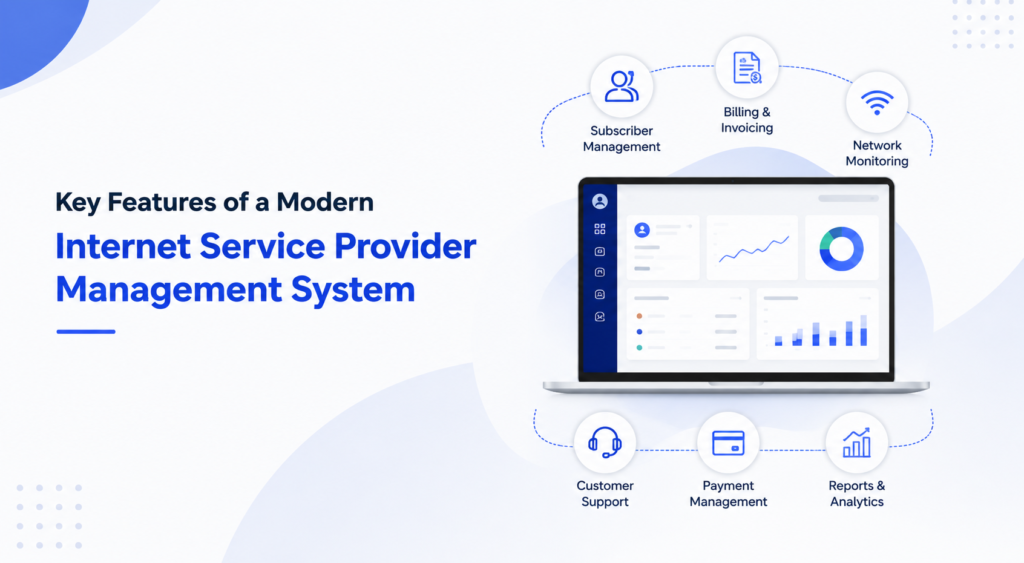
Key Features of a Modern Internet Service Provider Management System
1. Automated Billing and Payment Processing
Billing is one of the most critical aspects of ISP management. Automated billing systems generate invoices, process payments, and send payment reminders without manual intervention.
Benefits include:
- Faster payment collection
- Reduced revenue leakage
- Improved customer convenience
- Lower administrative workload
2. Subscriber Lifecycle Management
Managing customer information becomes easier through centralized subscriber databases.
Features include:
- Customer onboarding
- Service activation
- Plan upgrades
- Service suspension
- Account renewal management
This ensures a seamless customer experience throughout the subscription lifecycle.
3. Real-Time Network Monitoring
Network downtime directly impacts customer satisfaction and business reputation.
Modern systems provide:
- Real-time network visibility
- Performance monitoring
- Outage detection
- Automated alerts
- Capacity planning tools
These capabilities allow ISPs to identify and resolve issues before customers are affected.
Reliable network performance is essential for customer satisfaction. Following industry-recognized Network Management Best Practices helps ISPs improve uptime, proactively address issues, and deliver a better user experience.
4. Customer Support and Ticketing
A built-in support management system enables providers to handle customer issues efficiently.
Features include:
- Ticket creation
- Complaint tracking
- Issue escalation
- Service request management
- Customer communication logs
Faster resolution times lead to higher customer retention rates.
5. Data Analytics and Reporting
Data-driven decision-making is becoming increasingly important.
Advanced reporting tools provide insights into:
- Revenue performance
- Subscriber growth
- Churn rates
- Network utilization
- Payment trends
These insights help businesses optimize operations and identify growth opportunities.
Emerging Trends in ISP Management for 2026
AI-Powered Network Management
Artificial Intelligence is transforming network operations by enabling predictive maintenance and intelligent traffic management.
AI can help ISPs:
- Predict network failures
- Optimize bandwidth allocation
- Detect unusual activities
- Improve service reliability
Self-Service Customer Portals
Today’s customers expect instant access to account information.
Modern ISP systems offer self-service portals where customers can:
- View invoices
- Make payments
- Upgrade plans
- Raise support tickets
- Monitor data usage
This reduces support workload while improving customer satisfaction.
Cloud-Based Infrastructure
Cloud-hosted ISP management systems are becoming increasingly popular due to their flexibility and scalability.
Benefits include:
- Lower infrastructure costs
- Remote accessibility
- Automatic updates
- Enhanced security
- Easy scalability
Cloud-hosted ISP management systems are becoming increasingly popular due to their flexibility and scalability. Businesses adopting modern Cloud Computing Solutions can improve operational efficiency, reduce infrastructure costs, and support long-term growth.
Integrated Digital Payment Solutions
Digital payments have become a standard expectation.
Modern systems support:
- UPI payments
- Credit and debit cards
- Online banking
- Digital wallets
- Automated recurring billing
This creates a smoother payment experience for customers.
Benefits of Implementing an Internet Service Provider Management System
Increased Operational Efficiency
Automation reduces manual tasks and improves workflow efficiency across departments.
Better Customer Retention
Faster support, accurate billing, and reliable service contribute to improved customer loyalty.
Reduced Costs
Streamlined processes help lower administrative expenses and operational overhead.
Faster Business Growth
With scalable systems in place, ISPs can onboard more customers without significantly increasing operational complexity.
Improved Revenue Management
Automated invoicing and payment tracking ensure consistent cash flow and reduced payment delays.
How to Choose the Right ISP Management Solution
When selecting an Internet Service Provider Management System, consider the following factors:
- Scalability for future growth
- Automation capabilities
- Network monitoring features
- Billing flexibility
- Security standards
- Customer support tools
- Integration options
- Reporting and analytics capabilities
A future-ready platform should support both current operational requirements and long-term business expansion goals.
Conclusion
As the ISP industry becomes more competitive, adopting a robust Internet Service Provider Management System is no longer optional-it’s a strategic necessity. From automated billing and customer management to AI-powered monitoring and advanced analytics, modern ISP software enables providers to improve efficiency, enhance customer satisfaction, and scale sustainably.
Businesses looking to streamline ISP operations and maximize growth can explore solutions from Netzur, a trusted provider of advanced ISP management and network automation technologies.
FAQs
1. What is an Internet Service Provider Management System?
An Internet Service Provider Management System is software that helps ISPs automate billing, customer management, network monitoring, support services, and operational workflows.
2. Why is ISP management software important for business growth?
ISP management software improves efficiency, reduces operational costs, enhances customer service, and enables providers to scale their subscriber base more effectively.
