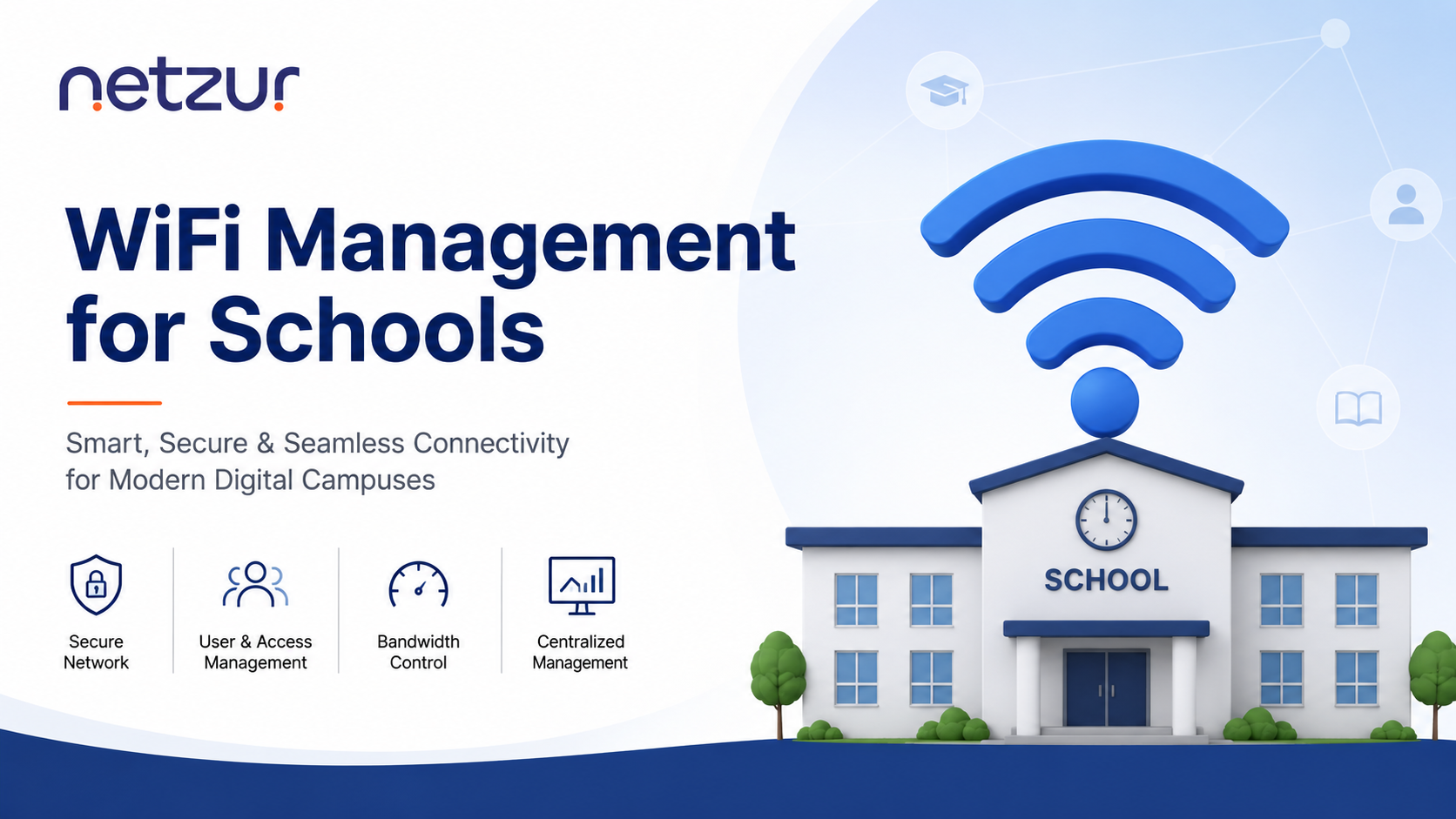
Technology is transforming education faster than ever before. From smart classrooms and online assessments to cloud-based learning platforms, schools now rely heavily on stable internet connectivity for everyday operations. As digital learning continues to expand, wifi management for schools has become one of the most important investments for modern educational institutions.
In 2026, schools are no longer simply providing internet access – they are building fully connected learning environments. Students, teachers, administrators, and devices all require secure and uninterrupted connectivity. Without proper WiFi infrastructure and management, schools can face slow performance, security vulnerabilities, and classroom disruptions.
The Growing Need for Smart Wi-Fi Management in Schools
Educational institutions today manage hundreds or even thousands of connected devices simultaneously. Laptops, tablets, smart boards, security systems, and IoT-enabled devices all consume bandwidth throughout the day.
Traditional networking systems are often unable to handle this growing demand. This is why schools are shifting toward advanced WiFi management systems that provide:
- Centralized network control
- Faster internet performance
- Better device management
- Enhanced cybersecurity
- Scalable infrastructure
- Seamless classroom connectivity
Modern schools need intelligent network systems capable of supporting hybrid learning models and cloud-based education platforms.
According to EdTech Magazine, digital transformation in education is rapidly increasing the demand for secure and scalable school networking solutions.
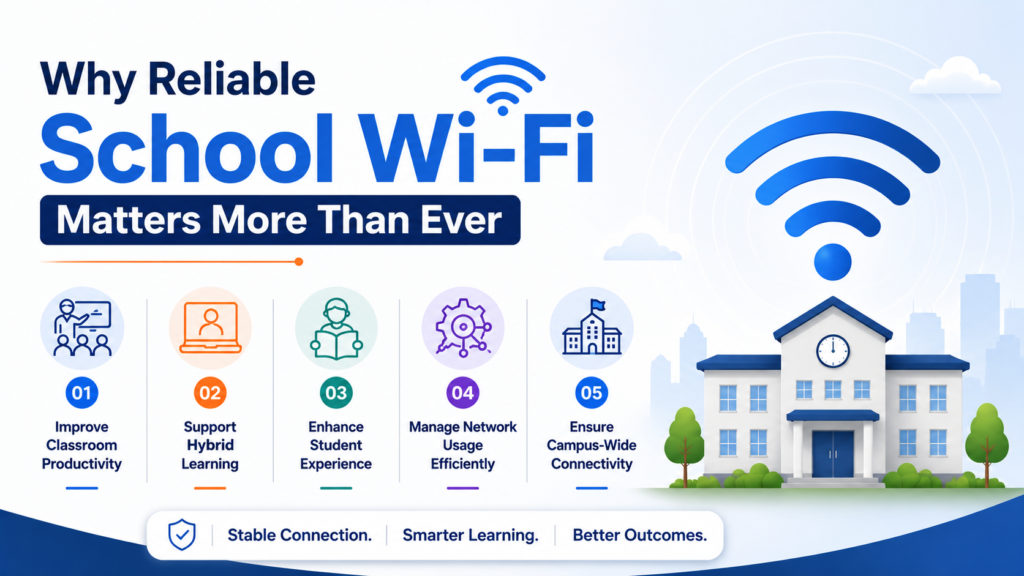
Why Reliable School Wi-Fi Matters More Than Ever
A weak network can directly affect learning outcomes. Teachers depend on digital tools for presentations, assessments, attendance systems, and collaborative learning. Students require uninterrupted internet access for research, online learning portals, and virtual classrooms.
When schools experience network downtime or slow speeds, productivity drops significantly.
Effective wifi management for schools helps educational institutions:
1. Improve Classroom Productivity
Fast and stable internet allows teachers to conduct interactive and engaging lessons without interruptions.
2. Support Hybrid and Online Learning
Schools now require infrastructure that supports both in-person and remote education simultaneously.
3. Enhance Student Experience
Reliable connectivity helps students access educational content instantly without buffering or lag.
4. Manage Network Usage Efficiently
Advanced WiFi systems can prioritize educational applications while limiting non-essential traffic.
5. Ensure Campus-Wide Connectivity
Managed WiFi solutions provide seamless coverage across classrooms, libraries, auditoriums, and outdoor learning spaces.
Cybersecurity is a Major Priority for Schools
One of the biggest reasons schools are investing in managed networking systems is cybersecurity. Educational institutions store sensitive student and staff data, making them common targets for cyber threats.
Modern WiFi management systems include features such as:
- Secure user authentication
- Firewall protection
- Content filtering
- Device access control
- Network monitoring
- Threat detection systems
These tools help schools create safer digital environments for students and educators.
According to Cisco Education Networking Insights, secure and scalable networking infrastructure is now critical for future-ready educational campuses.
AI and Cloud-Based Networking Are Changing School Infrastructure
In 2026, AI-powered networking solutions are becoming increasingly popular in educational institutions. Smart WiFi systems can now automatically identify network congestion, optimize bandwidth, and troubleshoot issues in real time.
Cloud-managed networking platforms also allow IT administrators to monitor school networks remotely. This reduces maintenance complexity while improving overall efficiency.
Trending technologies in school WiFi management include:
- AI-driven network optimization
- Cloud-based access management
- Automated troubleshooting
- IoT-enabled campus connectivity
- Smart bandwidth allocation
- Real-time analytics and reporting
These innovations help schools reduce downtime while improving digital learning experiences.
How Managed Wi-Fi Improves Digital Learning
Modern education depends on digital collaboration tools such as:
- Google Classroom
- Microsoft Teams
- Zoom
- Learning Management Systems (LMS)
- Online examination platforms
Without a properly managed network, these platforms may experience delays, affecting classroom engagement and learning continuity.
Managed WiFi systems help schools deliver:
- Faster online classes
- Better video conferencing quality
- Reliable cloud access
- Smooth digital assessments
- Consistent streaming for educational content
As educational technology evolves, schools need infrastructure capable of handling increasing digital demands.
Key Features Schools Should Look For
When choosing a WiFi management solution, schools should focus on features that support long-term scalability and security.
Important features include:
- Centralized dashboard management
- Guest network access
- Role-based permissions
- High-density device support
- Scalable cloud infrastructure
- Advanced security protocols
- Real-time network analytics
The right solution should be easy to manage while supporting future educational technologies.
Conclusion
As digital education continues to evolve, investing in effective wifi management for schools is no longer optional. Schools require secure, scalable, and intelligent networking systems that can support modern learning environments and future technological growth.
From improving classroom productivity to strengthening cybersecurity and enabling hybrid learning, managed WiFi solutions are becoming essential for educational institutions worldwide. To explore advanced networking solutions designed for modern schools, visit NetZur.
FAQs
1. Why is Wi-Fi management important for schools?
WiFi management helps schools maintain secure, stable, and high-speed internet connectivity for digital learning and campus operations.
2. What are the benefits of managed Wi-Fi for schools?
Managed WiFi improves classroom productivity, enhances cybersecurity, supports hybrid learning, and ensures seamless connectivity across campus.
3. How does AI improve school Wi-Fi networks?
AI-powered systems can automatically optimize bandwidth, detect issues, and improve network performance in real time.
4. Can managed Wi-Fi support large numbers of devices?
Yes, modern school WiFi systems are designed to support high-density environments with thousands of connected devices.
5. What security features should school Wi-Fi systems include?
Schools should look for secure authentication, firewalls, content filtering, device management, and real-time threat monitoring.